
Demande de devis
Contactez notre expert pour trouver la solution la mieux adaptée à vos besoins.
Opel, Vauxhall and Fiat badges are useful catalogue filters, but they do not identify a timing tool. A buyer needs the engine code, the engine variant and the procedure the shop plans to perform. Even kits with the same displacement on the case can differ in their locking plate, locating pins or how they hold a pulley. Start with market-specific vehicle data and cross-check the actual tool numbers before ordering.
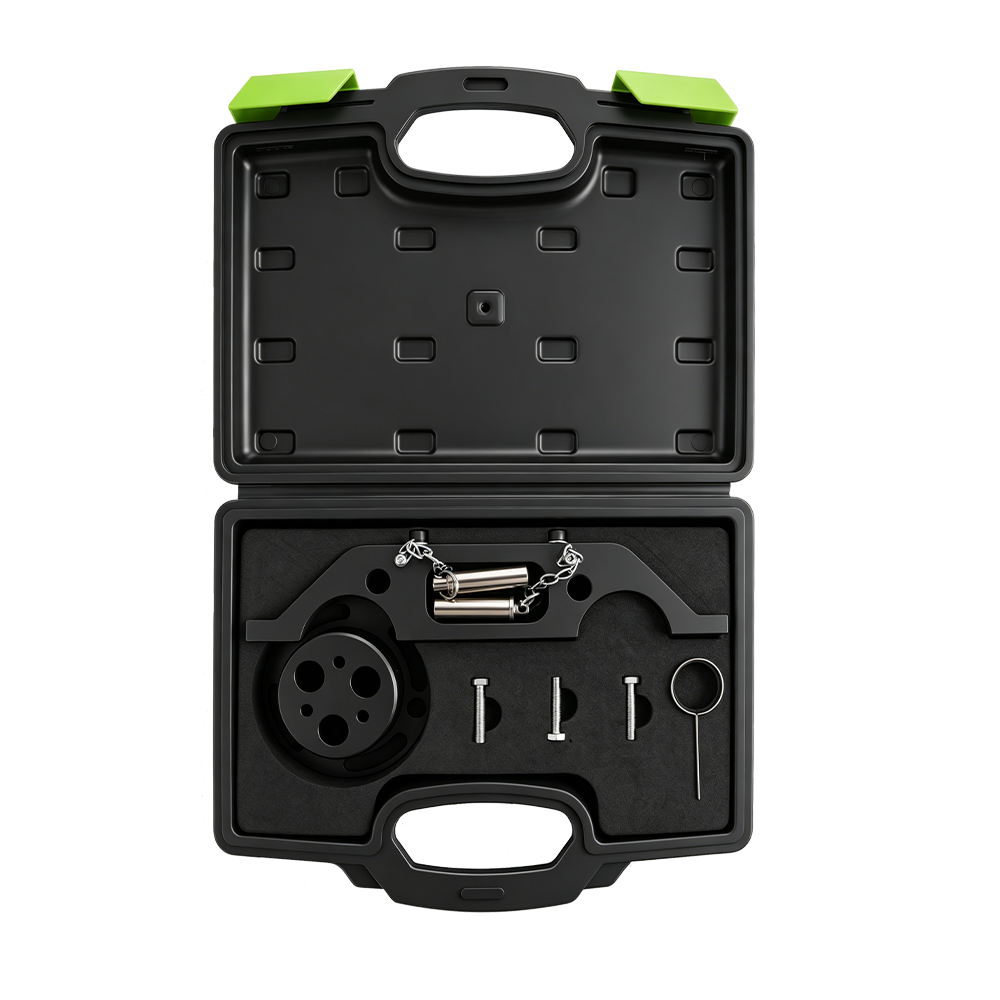
Le VT18754 Opel, Vauxhall and Chevrolet turbo timing kit is a reference for selected 1.0, 1.2 and 1.4 applications. Read the individual engine list before using it as a multi-brand SKU. Opel’s 2.2 16V water pump job is a separate purchasing line: a sprocket support tool keeps a component in position during the specified pump repair and should not be sold as a full timing kit. For older naturally aspirated engines, keep the listed engine codes separate from the newer turbo catalogue labels.
Compare the VT13983G 1.4 MultiAir timing tool set and the VT01243 Fiat and Lancia 1.6 16V set as separate listings. If your assortment serves van workshops, consider a dedicated entry for the VT13025 Ducato and Daily diesel timing set. Passenger cars and commercial vehicles often come through different catalogue channels even where the model names and tool references overlap.
For each kit, record the VIKTEC SKU, the exact engines for which you have verified coverage, applicable OEM service tool references, and a photo or packing list that identifies the individual fixtures. Add a field for separate counterholds or supports called for by the repair procedure. If two sets share a plate, catalogue them together only after checking pin shapes, diameters and bracket details. Identical case colour or piece count does not establish interchangeability.
For cross-brand coverage, see the vehicle-specific tools catalogue. For a comparison across engines and service tasks, use timing and locking tools by operation. To discuss a wholesale order, send us your engine list and target SKUs. Include your sales market, intended work, quantities and any OEM references that are already on the buyer’s list.
Some listings name engines used across more than one brand. Use the engine codes and component references in the individual listing. A cross-brand fitment does not establish coverage for every engine with the same displacement.
No. Keep MultiAir and other 1.4 variants separate until the engine code and service tool references match. Check the actual locking parts before entering an interchange claim in your catalogue.
Only use a tool to take fastener load when the service procedure and tool instructions specify that use. A locating pin or plate that establishes timing can be a different part from the pulley counterhold.
Identify the engine and pump repair procedure, then check whether it calls for a sprocket support by itself or a separate set of timing tools. Compare the actual fixtures rather than the engine label alone.
Use the SKU’s listed engine and application codes as the starting point. Confirm the service tool references for the particular engine and operation on the Daily before listing it as a fitment.
Look closely at similar locating pins, handed fixtures and plates with different offsets. Compare the tool marks, working-end geometry and packing list while the set is still at receiving.
Send the engine code, make, model, model year, market, requested service operation and any OEM tool numbers available to you. If your workshop has the relevant service-manual tool callout, include it in the inquiry.
Contactez notre expert pour trouver la solution la mieux adaptée à vos besoins.