On a vehicle with an electronic parking brake, first establish how the manufacturer puts the rear brake in its service state. Then identify the piston movement it specifies for that caliper. The diagnostic system can move or release the parking brake mechanism. A compatible hand tool can carry out the subsequent mechanical movement where the procedure calls for one. The quote should show which part of the work each tool covers.
That distinction matters when a workshop asks for an “EPB piston tool.” It may need access to a service function, a plate that fits a particular caliper, or both. Ask which vehicle and brake configuration it is servicing before offering a wind-back set or spreader. This guide concerns equipment selection and job planning. Use the manufacturer’s procedure to perform and verify the actual brake work.
Identify the mechanism and the specific service job
Start with the vehicle and the rear brake layout. Some arrangements have an actuator on the caliper. Other systems use a different arrangement to apply the parking brake. The driver’s control switch does not establish where the parking brake acts or which special tools are needed. Obtain the caliper identifier and check the service drawing for the operation the workshop needs to perform.
Record whether the work is pad replacement, a caliper or actuator replacement, or another repair. The preparation and checks can differ even when the same vehicle appears on the work order. A shop quoting pad service may need an approved release routine followed by a plate. A shop replacing an assembly may need additional checks, a bleed procedure if the hydraulic circuit is opened, or steps specific to the replacement component. Quote the operation explicitly.
For a fleet, the same model name can cover several brake packages and production dates. Record the year, market, relevant hardware and software when the service documentation distinguishes them. The safest place to store that detail is the application row next to the service document and tool references. Staff can then see why two similar vehicles in the same fleet have different tooling requirements.
Put the electronic and mechanical requirements on separate lines
| Stage | What to confirm | What the buyer can specify |
|---|---|---|
| Prepare for service | The prescribed service state, the allowed access method, and how the vehicle is secured for the job. | Vehicle or diagnostic coverage, procedure reference and equipment required for that operation. |
| Confirm the mechanism is ready | The vehicle’s completion indication and what to do if the routine reports a fault or is unavailable. | The exact function or screen name and any supported vehicle or software conditions. |
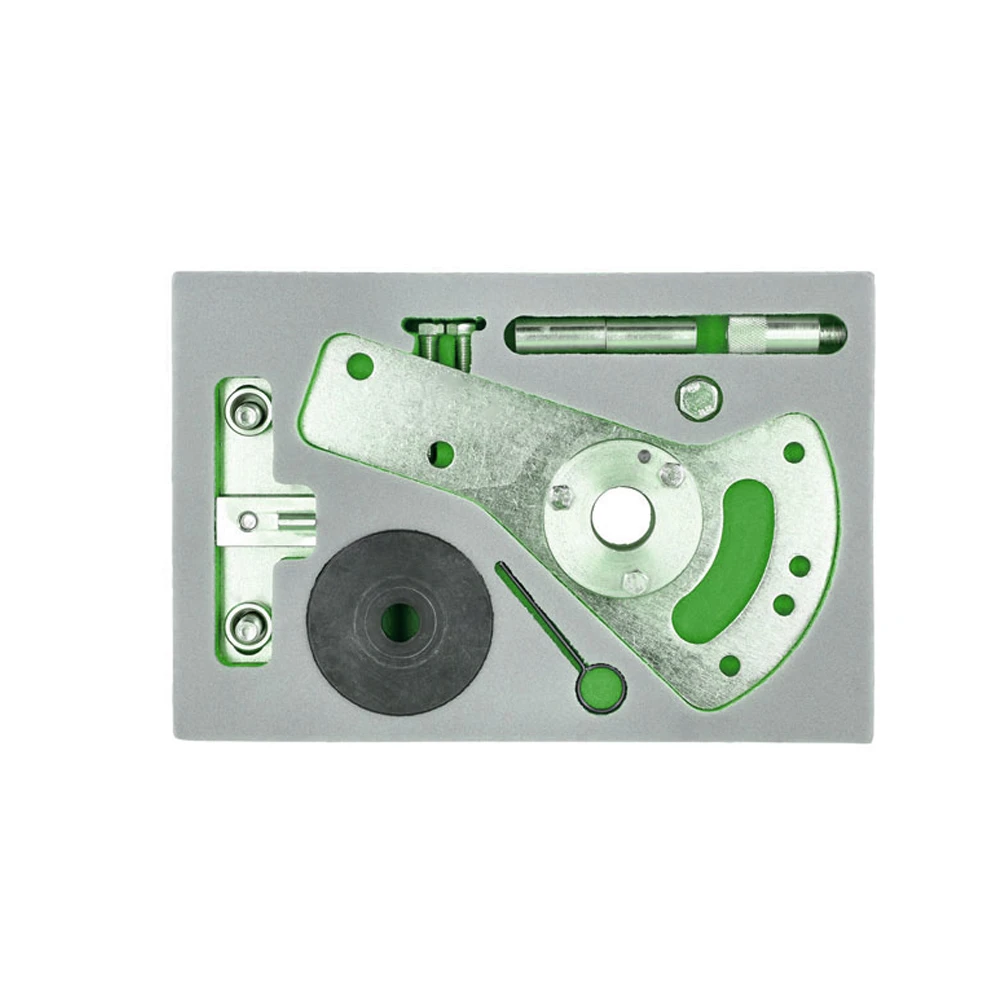
| Retract or position the piston | The specified piston movement and the approved contact surface. | Spreader, plate or wind-back hardware, with adapter ID, fit and clearance. |
| Return to operation | The required exit, initialization or verification procedure after reassembly. | Diagnostic access and workshop acceptance checks tied to the applicable repair document. |
Use the vehicle’s documentation to check each row. A diagnostic tool listing that says it supports the vehicle can still omit the required service function. Ask for coverage of the exact operation and brake configuration, including whether the shop needs a subscription or access permission for its equipment. Verify those dependencies with the equipment supplier. The name “service mode” on a scan tool menu is not proof that the intended routine is available for the vehicle in front of the workshop.
The vehicle may provide a way to run a routine from its own interface, through manufacturer software or using supported diagnostic equipment. Tesla’s Service Mode guide illustrates separate brake functions for EPB service and for hydraulic brake bleeding. It also notes that panels can vary with vehicle, software and hardware. That example is useful for writing procurement requirements, and it does not establish the menu sequence for any other vehicle. Tesla Service Mode brake functions
Check the prescribed piston movement after the electronic step
After the service state is confirmed, follow the documented piston method. A caliper may use axial compression and still have features on the face used for orientation. Other applications call for a different movement and a specified adapter. Do not use a slotted piston face to infer that every EPB caliper winds back. Identify the caliper, its mechanical action and any final face position independently.
Tesla’s integrated parking brake cleaning and lubrication instructions for a specified 2012–2020 Model S configuration illustrate the distinction. They describe using EPB service mode, then a spreader on the rear caliper, and separately specify the orientation of piston face slots for the reassembled caliper. Those details belong to the named procedure. Their value here is to show that service mode, piston motion and final orientation are three decisions. Tesla Model S integrated parking brake procedure
Once the mechanical motion is known, check where the plate will bear. For straight compression, look for suitable axial contact and enough room for the plate and drive. For a specified wind-back setup, verify the face adapter and spindle under the vehicle and tool instructions. A tool that loads a boot, edge or unapproved contact is an unsuitable fit. If the work concerns opposing or multiple pistons, confirm whether all specified contact points can be supported together.
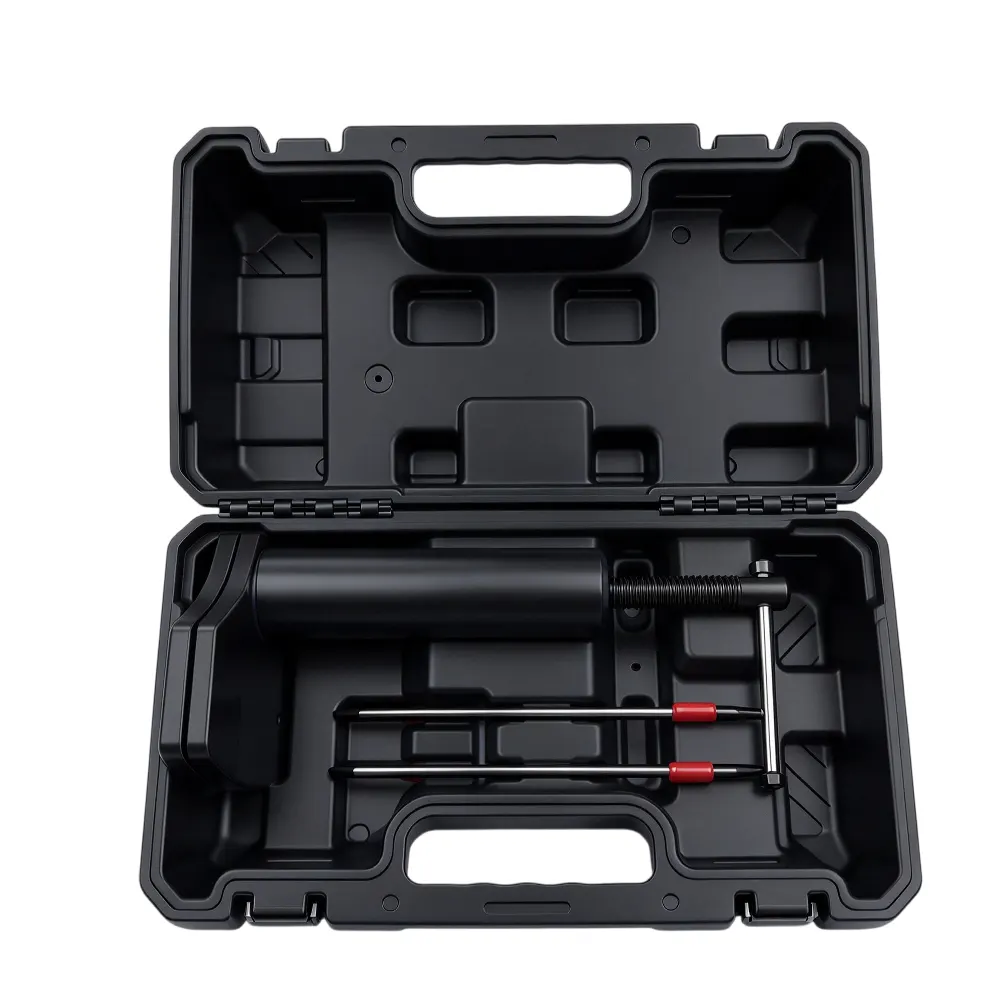
Know which questions the product page can answer
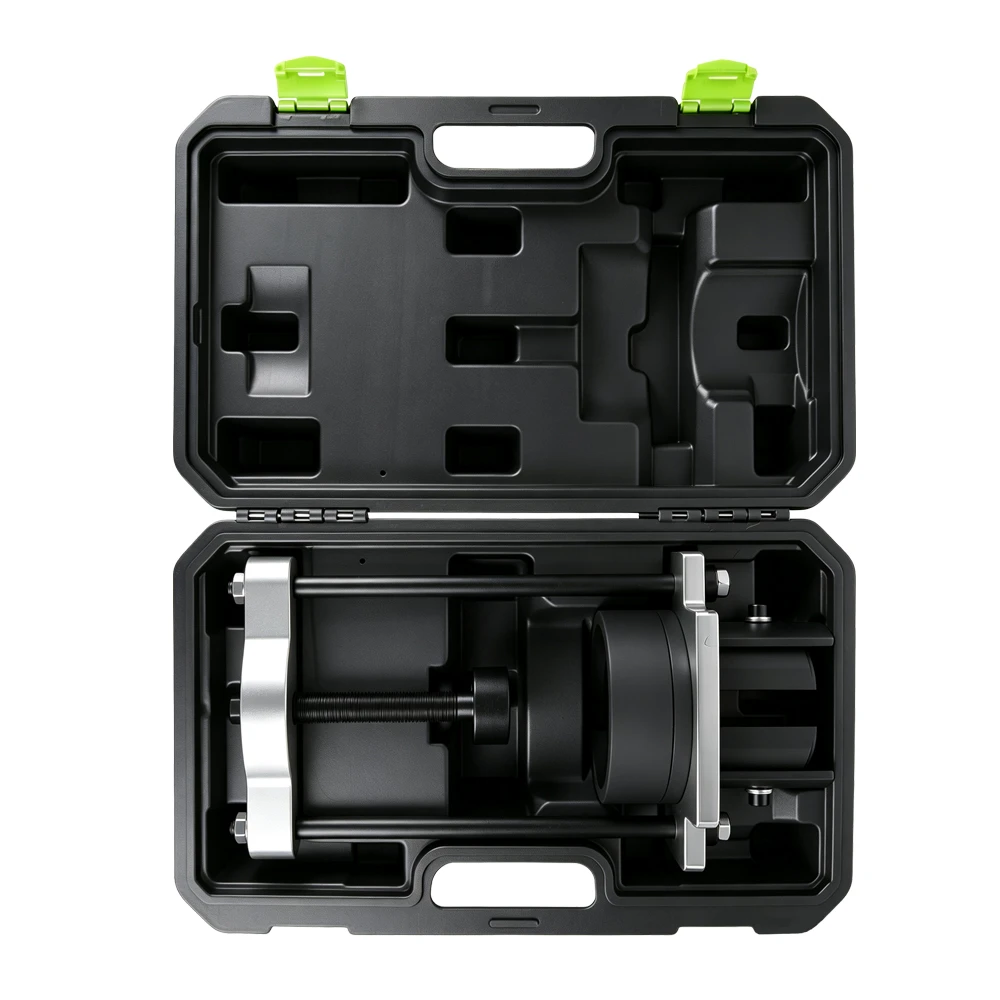
Die VIKTEC VT01133J caliper compressor kit is listed as mechanical tooling for compatible calipers. Its product information describes pressing pistons during brake pad and caliper service. It does not establish an electronic service function for a particular vehicle. A buyer can ask for plate dimensions, usable range and contact information, then check those against the documented mechanical stage.
When comparing two mechanical tools, record the actual caliper opening, piston positions and room for the intended driver. Match the plate to the approved contact surfaces and check it unloaded. Ask whether a spare plate can be identified separately and whether the tool instructions specify a particular orientation. This gives the shop a way to verify the mechanical fit without treating a broad EPB label as coverage.
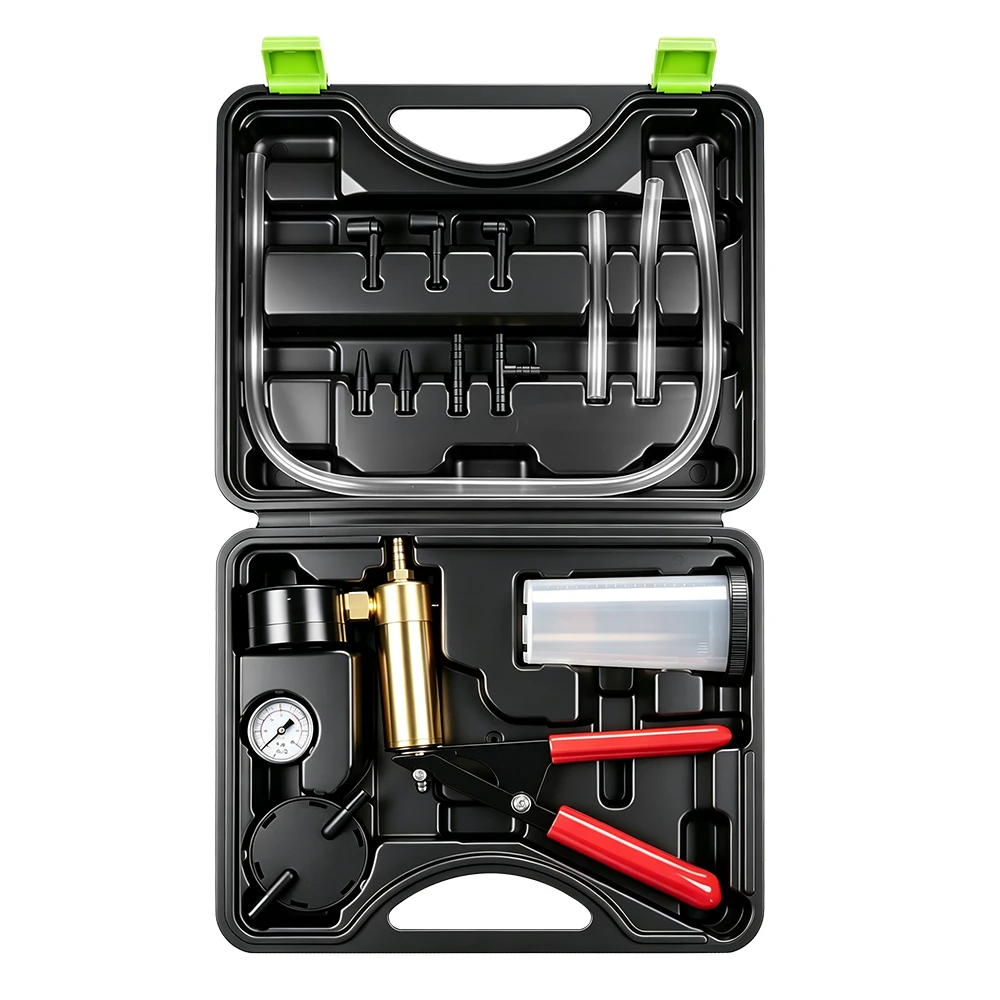
If a kit is offered to a distributor as suitable for EPB service, document which part of service it supports. A clear listing can name the compatible mechanical operation and tell the technician to obtain the vehicle’s instructions for the service state and exit checks. Avoid including unsupported model coverage, implied scan-tool compatibility or claims that the kit completes the whole job. Adjacent brake caliper and piston tools can be listed by their mechanical design.
Decide who will clear a fault before starting the trial
Agree who has the diagnostic access, the relevant repair information and responsibility for the vehicle. If a routine is unavailable, fails to complete or reports a fault, the workshop needs to stop and use the applicable diagnostic guidance. Trying a stronger mechanical tool at that point can obscure the reason the mechanism is still engaged. If the actuator, wiring or caliper is suspected of being faulty, record that as a diagnosis question, separate from whether a plate fits.
For a new fleet contract, use a sample job with a known vehicle and brake package. Ask the shop to record whether it obtained the specified service state, which tool and plate it used after that, and how the vehicle confirmed the final state. Keep the procedure revision and tool identifiers. If the fleet later introduces a different actuator or caliper, the old record is still useful for the original configuration. It should not automatically approve the new one.
Here is a common split in a purchase request. The main depot already has access to the required routine and needs a compact mechanical plate for an approved job. A satellite depot has the same mechanical need but has yet to establish diagnostic access. The quote can cover the same hand tool for both locations, while the readiness record identifies the additional equipment or service access needed at the satellite. Supplying more plates would not close that gap.
Put the final checks in the job record as well. Depending on the procedure, the shop may need to exit service mode, initialize or verify the parking brake, clear or diagnose relevant faults, and confirm service brake performance. The service information determines the sequence and criteria. The buyer should avoid claiming an application has been validated if the sample only confirmed plate clearance.
Write acceptance checks the service team can reproduce
A repeat order should link the tool to the procedure edition and the brake assembly used in the original sample. Ask the workshop to identify the diagnostic function it ran and the mechanical part it used after the routine. Record the completion indication specified by the vehicle and the result of the reassembly and vehicle checks. A successful setup on a loose caliper can establish plate access. It leaves the electronic and vehicle checks open until the workshop can verify them.
Keep pad service and actuator replacement on separate entries if the procedure distinguishes them. The same workshop may have the equipment for both, yet the second job can require different checks or a different operation after installation. If the vehicle arrives with a parking brake fault, record the fault separately so it is not mistaken for a poor tool fit. Ask who will diagnose the fault and which technical information they will use before a new sample is attempted.
When a supplier quotes only the mechanical portion, attach the contact drawing and list the plate and tool body separately if either can change. The workshop can then verify whether a new tool revision retains the approved access without reopening every diagnostic question for the same vehicle.
Questions for EPB tool buyers
Can a diagnostic device make a separate piston tool unnecessary?
Only when the vehicle procedure does not require a further mechanical action for the job. Check the instructions after the service function finishes. If they call for a spreader or other adapter, confirm that tool independently.
Can an existing spreader be kept when a fleet introduces EPB vehicles?
Yes, for applications where the vehicle specifies compatible axial compression and the existing spreader fits the contact surfaces and access. Check the electronic preparation and completion separately. A spreader validated for one fleet vehicle should be rechecked on a different caliper.
What belongs in a fitment note for an aftermarket caliper?
Record the replacement part number, caliper and actuator arrangement, and the procedure the workshop has confirmed applies. Identify the mechanical adapter and the required diagnostic access. Ask the replacement supplier about any installation or initialization instructions for that part.
Does a successful electronic release establish that the brake is ready to return to service?
It establishes the documented preparation result only. Follow the reassembly, exit and final checks for the operation. A successful release cannot confirm the final condition of the hardware or the hydraulic system.
For a mechanical tool quote, send the vehicle and brake variant, caliper reference, the specified piston action, contact dimensions, access photos and quantity. Include the service document reference if available. Use the Anforderung des VIKTEC-Katalogs für Kfz-Werkzeuge for related equipment, or ask VIKTEC about the mechanical tool for your EPB application.