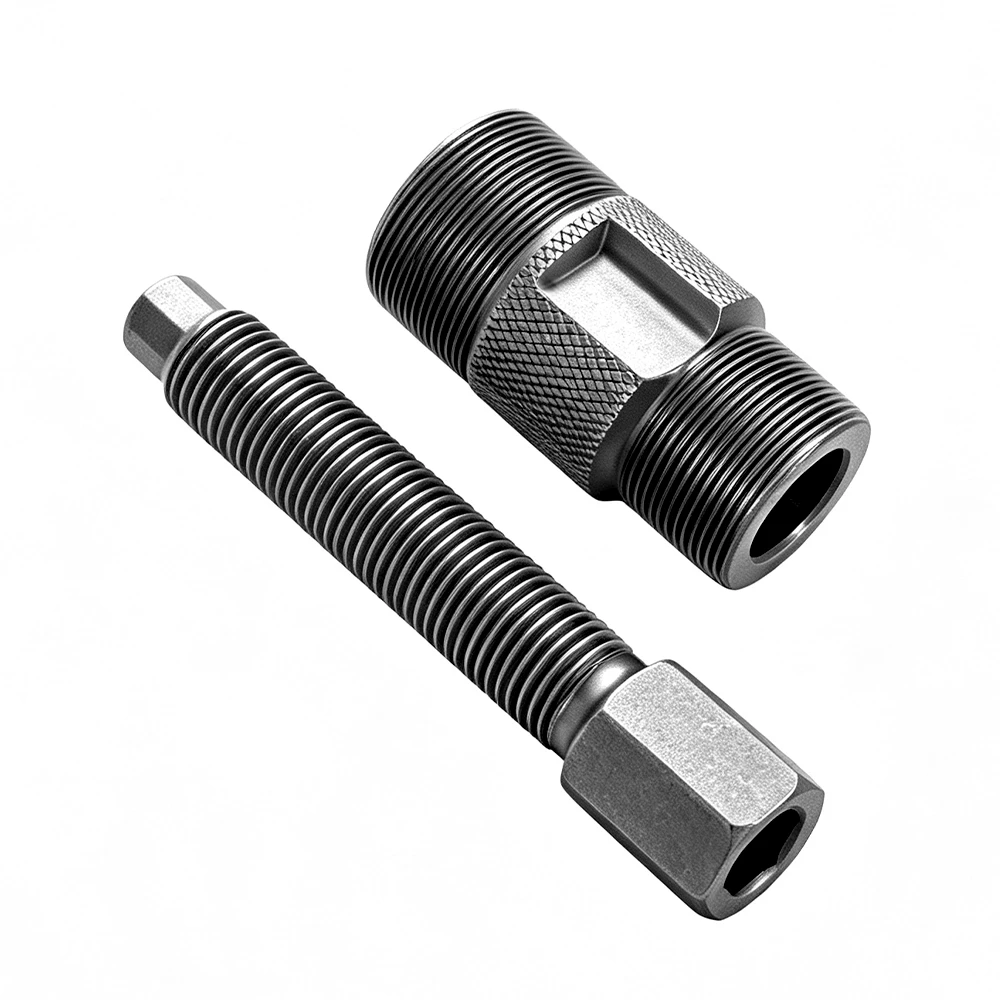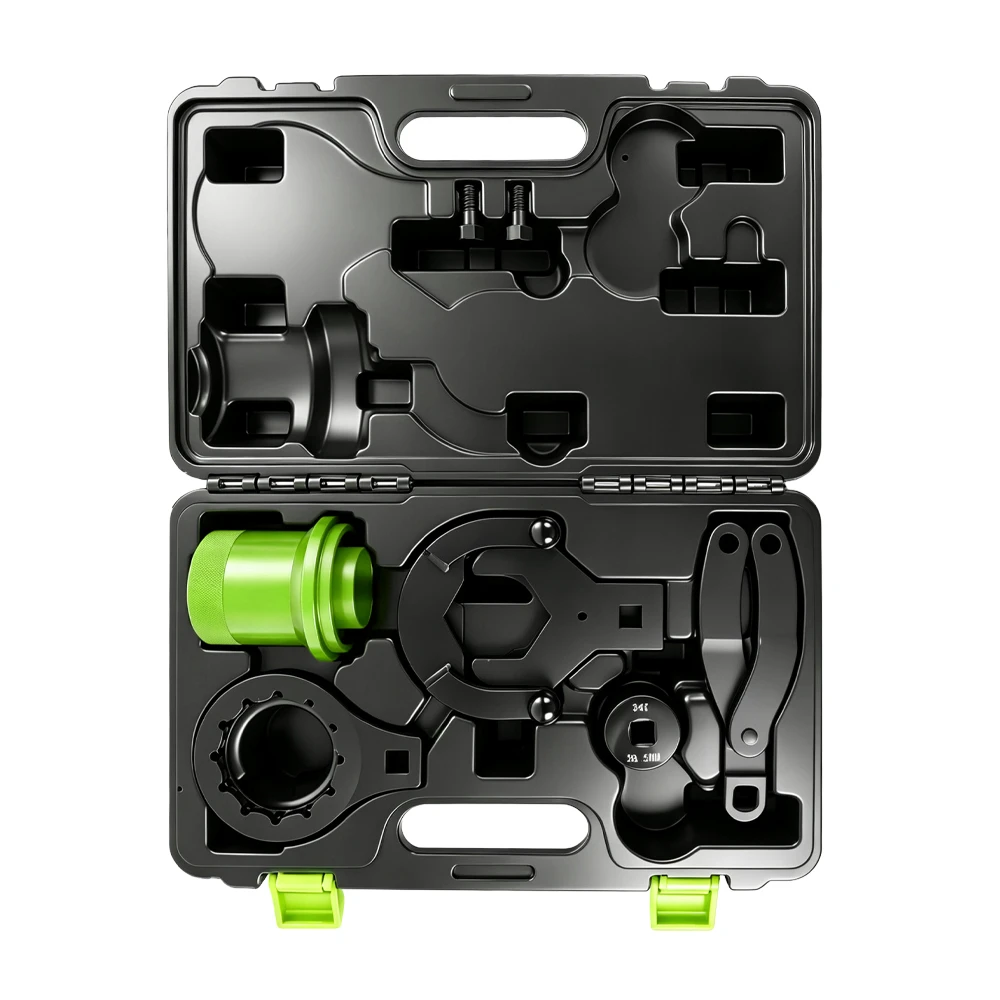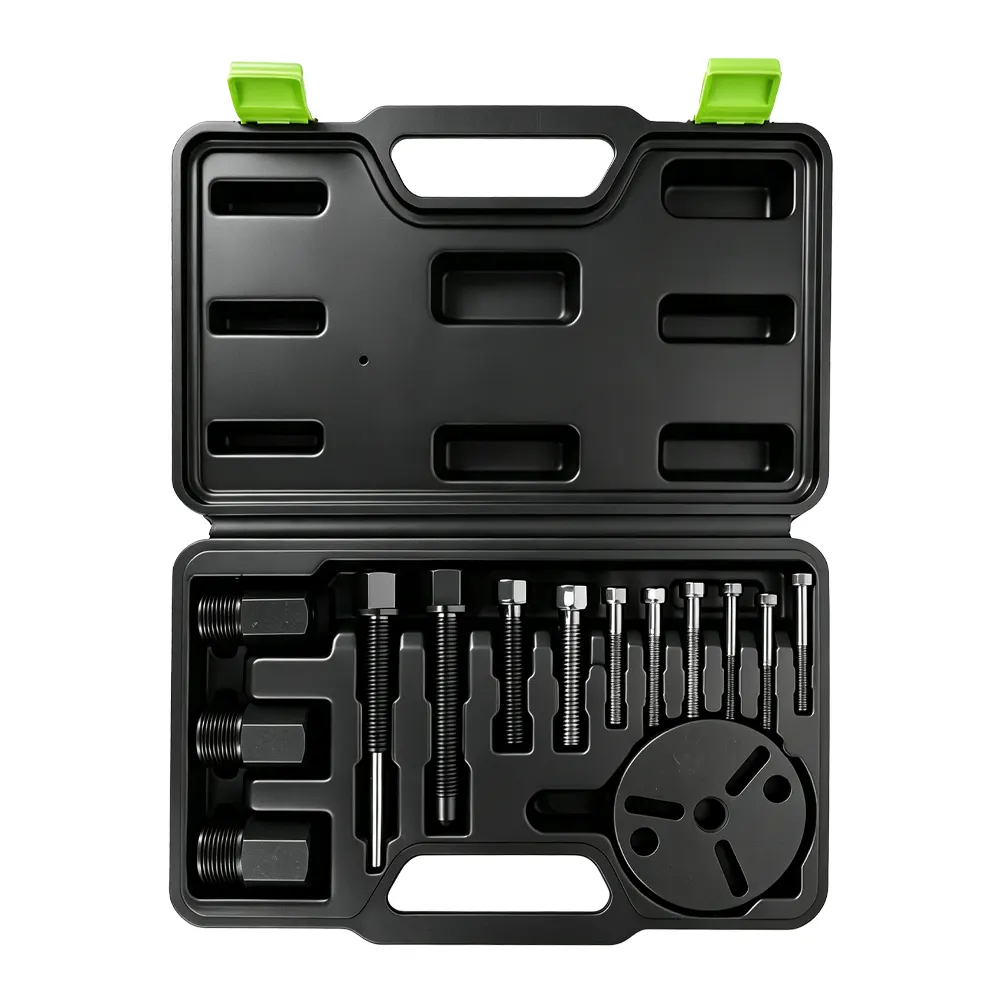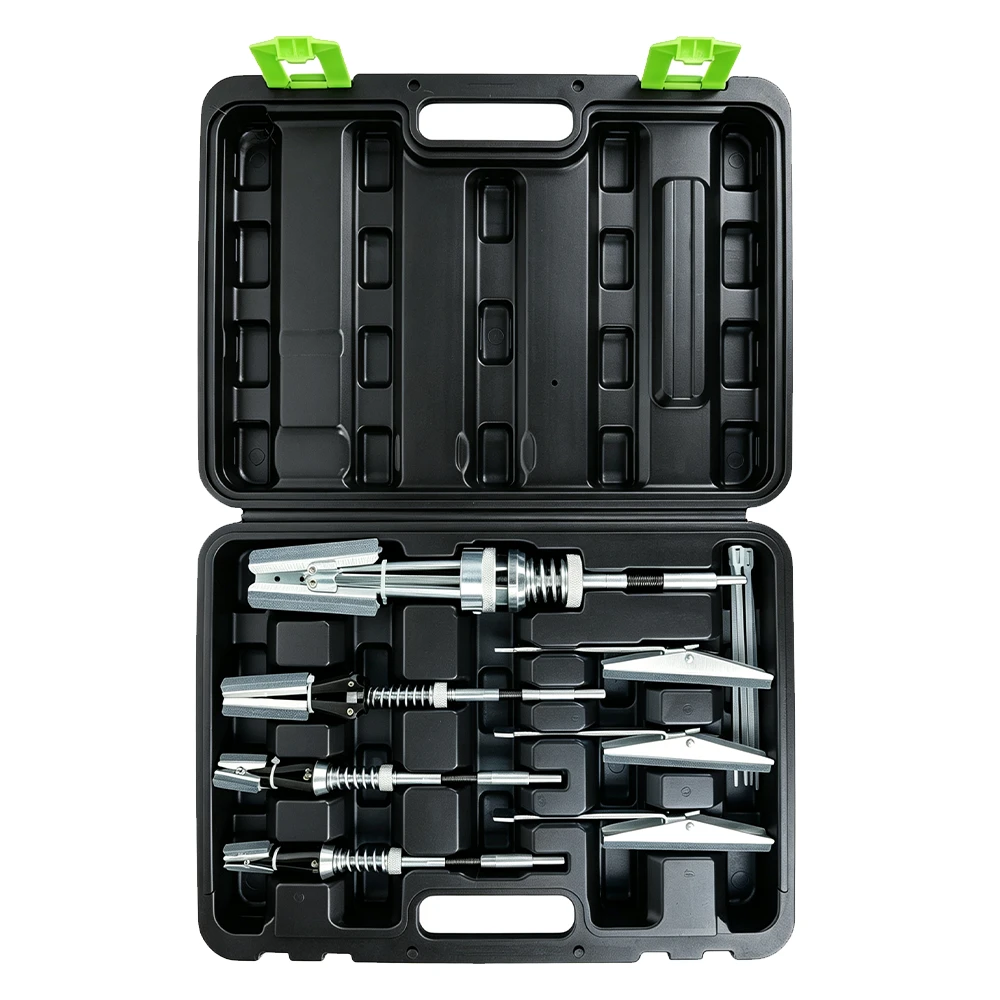
An external bearing puller grips the outside or rear face of an accessible component. An internal bearing puller engages from inside a bore or recess. Choose between them by the available gripping surface and the direction the bearing must travel—not by whether the tool looks larger or more powerful.
This distinction matters when building a repair-shop assortment. A shaft-mounted bearing and a bearing recessed inside a gearbox housing may have similar diameters yet need completely different extraction arrangements.
Compare the contact point and the reaction path
| Selection question | External puller | Internal puller |
|---|---|---|
| Where does it engage? | Outside/rear gripping surface accessible to jaws or a separator | Inside a bore, using a suitable internal engagement feature |
| What usually limits access? | Rear clearance, jaw thickness, reach and surrounding parts | Bore size, collet reach, engagement depth and recess geometry |
| Where does the pulling force react? | Often through a spindle against a supported shaft end | Through a bridge against suitable support surfaces, or through a slide-hammer arrangement |
| What must be checked beyond diameter? | Secure jaw contact and space for the complete tool | Whether the tool can actually engage and whether extraction travel is available |
The reaction arrangement is part of the selection. An internal collet is not a complete removal system by itself; its connector and pulling device must be compatible. Likewise, an external jaw assembly needs a suitable centre reaction point.
Three assemblies that explain the difference
A bearing exposed on a shaft
If the back of the intended gripping surface is accessible, external jaws may be appropriate. Inspect the whole circumference, because a nearby flange can prevent one jaw from seating even when the other two fit. A puller that can be positioned on the bearing is not necessarily one that can stay engaged as the bearing moves.
A bearing close to a shaft shoulder
This remains an external-access problem, even though ordinary jaws may not fit. A thin-edge separator may provide a usable contact arrangement when the tool instructions permit it. It should not be renamed an “internal puller” simply because the gap is narrow.
A bearing down inside a housing
Here the front opening may be the only access. Evaluate an internal extractor, but inspect the seat first. Some tools need space behind the bearing; others use a different engagement design. A blind housing describes the assembly, not a guarantee that every blind-hole puller will work.
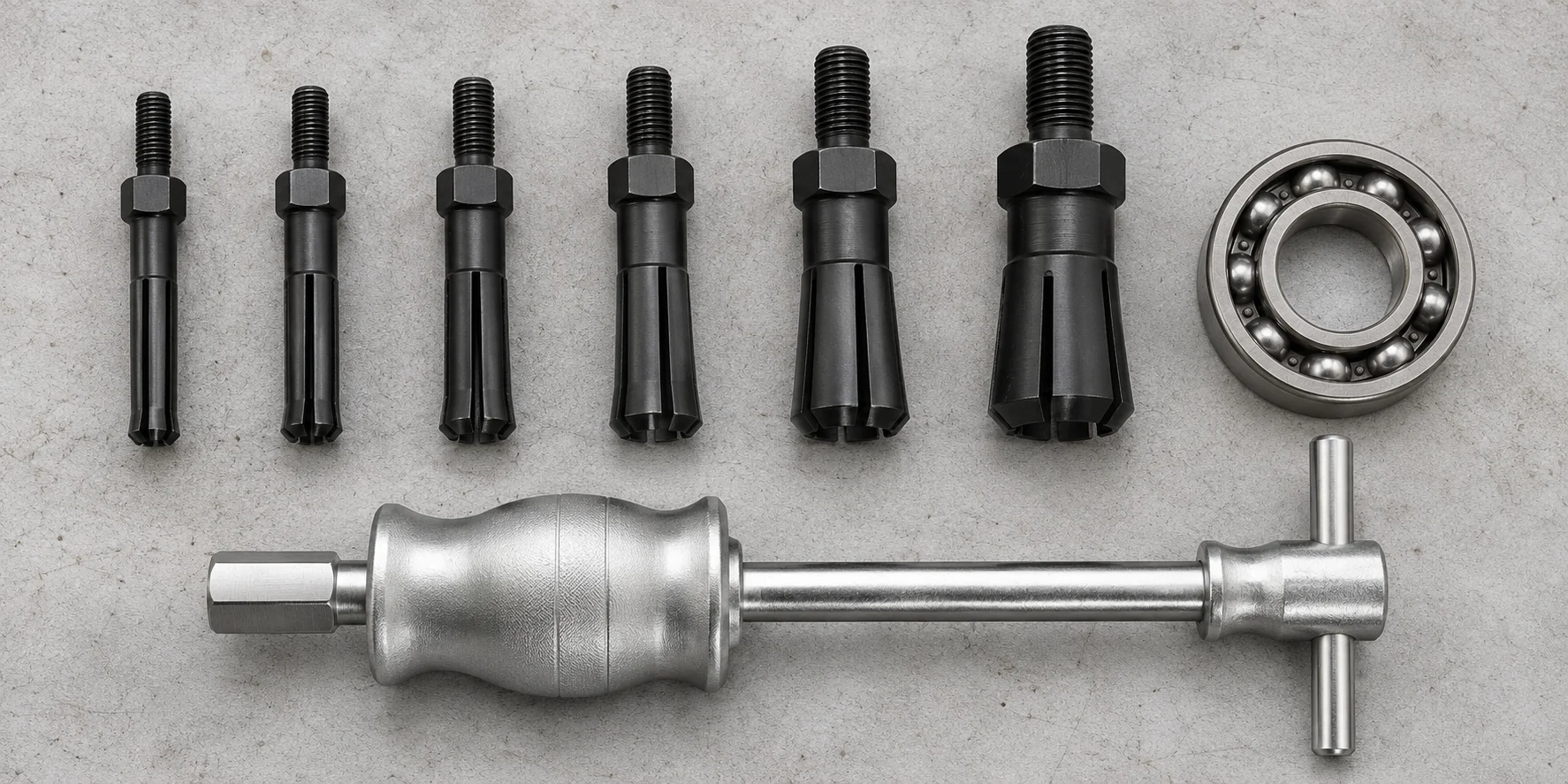
Bridge or slide hammer: a second decision
A bridge arrangement needs a suitable area on which its feet can react. Those contact areas must be appropriate for the load; a convenient-looking cover lip is not automatically a support surface. Check whether the bridge can sit squarely without obstructing the extraction path.
A slide hammer requires room for its working stroke and control of the assembly. It also changes how force is applied. Choose it only where the particular extractor and vehicle procedure allow that method.
For a concrete example, the BGS 70108 kit lists both a slide hammer and a spindle puller alongside its spreader claws. This illustrates why the pulling mechanism and the gripping parts should be reviewed together; it is not a compatibility claim for VIKTEC equipment.
How to assess a combined internal and external kit
A combined kit can be useful for buyers serving mixed workshops, provided each configuration is documented. Request separate internal and external working ranges, connector details and assembly illustrations. “34 pieces” tells you how many items are counted, not which bearing arrangements can be serviced.
The VIKTEC internal and external bearing puller set is one option to review against that checklist. For recessed-bearing work, compare it with the blind-hole internal bearing puller set. Ask for the current application and component details before treating the two kits as alternatives.
Specify coverage by job family
For a distributor catalogue, separate exposed shaft-bearing removal, restricted rear-access work and recessed housing extraction. This makes product selection clearer for customers and makes gaps in your assortment visible. Include replacement gripping parts in the enquiry: losing one frequently used collet can remove an important part of a kit’s practical coverage.
Browse bearing puller sets, then send VIKTEC the applications and access dimensions you need to cover. A front photograph plus a side view is more useful than the bearing diameter alone.
Frequently asked questions
Does “internal” mean the bearing is fitted to the inside of a vehicle?
No. It describes how the tool engages the component. An internal puller grips from within a bore or recess; the vehicle location does not determine the name.
Can reversible jaws turn any external puller into a blind-hole puller?
No. Reversible jaws may support more than one gripping arrangement, but a deep recess can still require a different head, collet or extraction method. Check the manufacturer’s illustrated configurations and the engagement space.
Can an internally extracted bearing be reused?
Do not assume it can. Suitability for reuse depends on the bearing, the load path and the applicable service instructions. Specify a preservation requirement before choosing the removal method.