
Request For Quote
Contact to our expert get the best solution for your requirements.
Choose brake disc inspection tools by the measurement and mounting arrangement. Check indicator units, usable travel and fixture access, then apply the vehicle’s disc retention, measurement position and service limits.
A disc runout reading describes movement of the rotating face relative to a fixed reference. The indicator needs a stable fixture and suitable resolution. Thickness and thickness variation require their own instruments and procedures. Order those as separate measurements where the vehicle requires them.
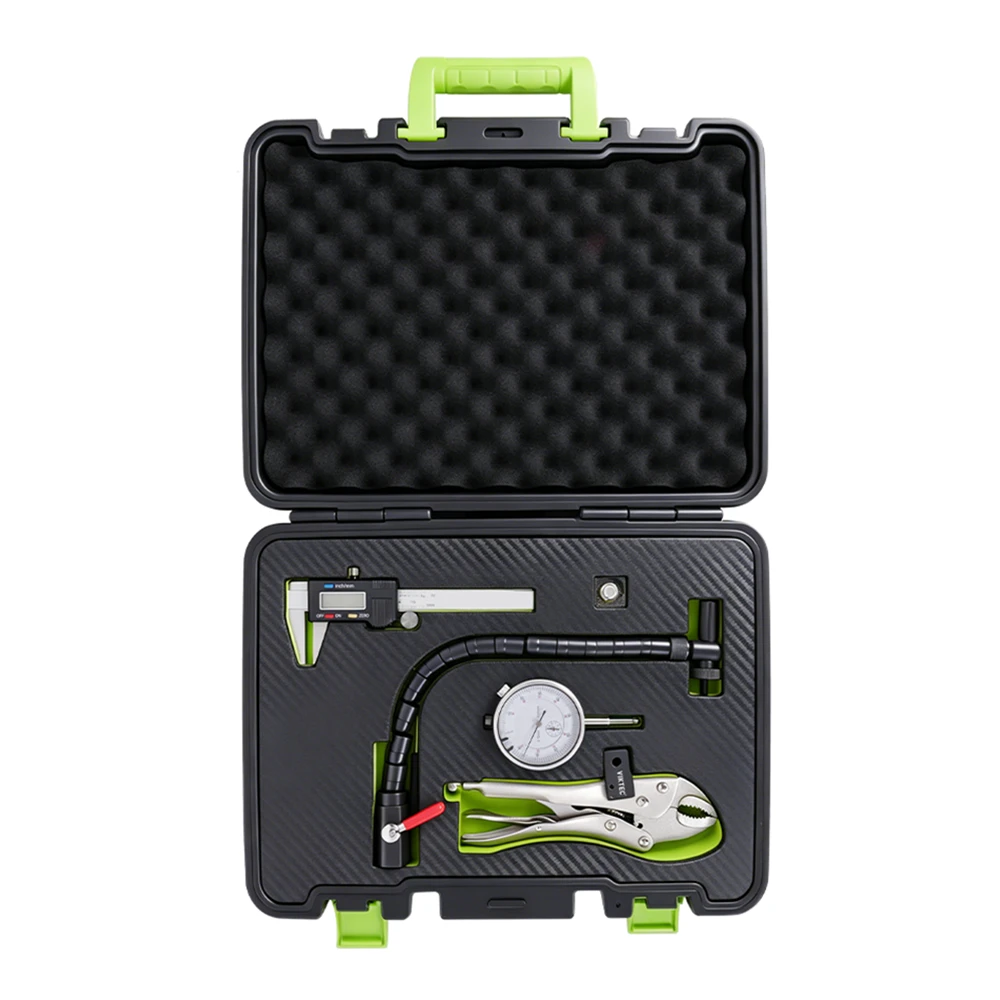
The VT18031C disc runout and vibration test kit is the relevant catalogue starting point. Confirm the current contents, dial scale and mounting arrangement. A readable gauge cannot deliver a useful result if its support shifts or cannot reach the prescribed track.
Inspect the mating surfaces and the hub or bearing condition according to the vehicle procedure. Retain the disc as specified during measurement. A high installed reading calls for the prescribed checks to locate its cause. Do not apply one vehicle’s limit to the whole product category.
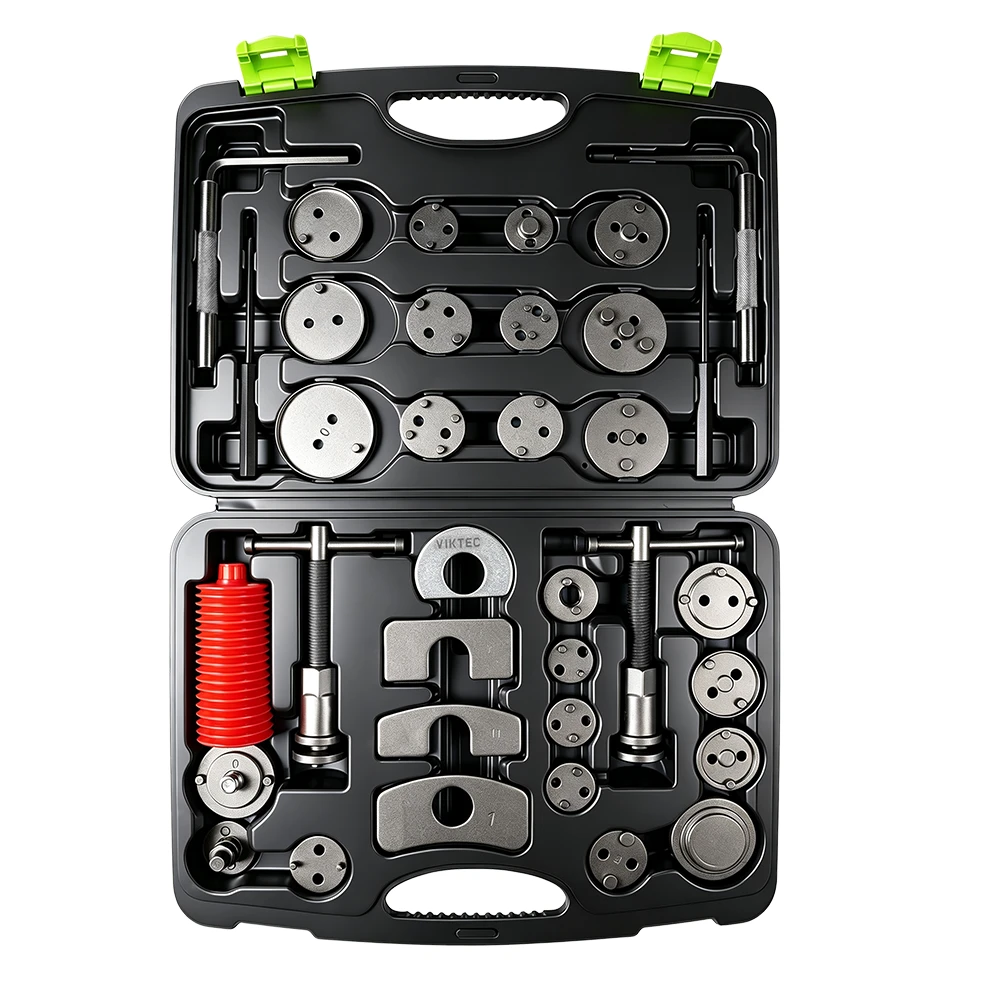
Piston compression and wind-back are separate tasks. If the job is pad replacement or caliper piston reset, choose from caliper and piston tools. The broader brake service catalogue also covers bleeding and pipe tools.
Provide the vehicle and brake package, measurement units, required gauge range and resolution, mounting surfaces and access photographs. State whether the workshop already owns an indicator or needs a complete setup. Send your brake disc inspection requirements for a quote.
A face-runout setup does not provide the distance across the two disc faces. Use the appropriate thickness instrument and procedure.
Contamination or an unsuitable seating condition can affect the assembled measurement. Use the vehicle’s cleaning and inspection requirements.
A suitable mounting surface and stable positioning are required. Check the actual fixture and contact surface before selecting the setup.
Use the service limit for the actual vehicle and brake package, measured under its prescribed conditions.
Use the caliper and piston category linked above and match the piston operation and adapter face.
Verify units, range, readable movement and compatible mounting. Follow the instrument maker’s verification and inspection requirements before use.
Provide the indicator mounting interface, working space, permitted support surfaces and required contact position.
Contact to our expert get the best solution for your requirements.