Before a coil spring compressor goes into service, confirm the tool’s identity, its condition and the approved configuration for the spring. A damaged jaw, worn drive thread, missing retainer or uncertain fitment is a reason to stop and refer the tool or job for review. A clean-looking compressor with a legible capacity label can still fail those checks.
Use this spring compressor safety checklist when receiving equipment, transferring it between bays or reviewing it before use. It helps buyers and workshop leads decide what evidence to ask for and how to record a defect. It does not give a compression procedure or substitute for the equipment manual, the vehicle service information or operator training.
Separate receiving, pre-use and maintenance checks
A receiving inspection establishes that the correct equipment arrived with the parts and documentation ordered. A pre-use check considers the tool’s present condition and the job in front of the operator. A maintenance review follows the manufacturer’s intervals and criteria. Passing any one of these does not cover the other two: a correctly received tool can be damaged in service, and a tool in good condition can still be unsuitable for a particular spring.
| Checkpoint | Evidence to record | When to hold it |
|---|---|---|
| Receiving | Model and tool ID, manual revision, component inventory and condition photos. | Missing documentation, mismatched parts, transit damage or unclear identification. |
| Before use | Tool condition, correct configuration and confirmed fitment for the job. | Damage, abnormal play, a missing retention part or unknown application. |
| Scheduled maintenance | Work required by the manual, approved parts and the person who released the tool. | Overdue review, unknown repair history or unresolved wear. |
| After an incident | Tool ID, affected components, date, event and action taken. | Suspected overload, drop, loss of engagement or other event requiring assessment. |
Define responsibility at the handover. Receiving staff can identify a missing parts list, but they should not approve the condition of a loaded mechanism. An operator can identify an immediate stop condition without diagnosing the internal cause. Give the responsible person the exact manual and a record of any prior issue. If the manufacturer requires a particular service channel, use that channel rather than inventing a local release procedure.
Inspect load-bearing parts and retention features
Jaws, plates, hooks and pads
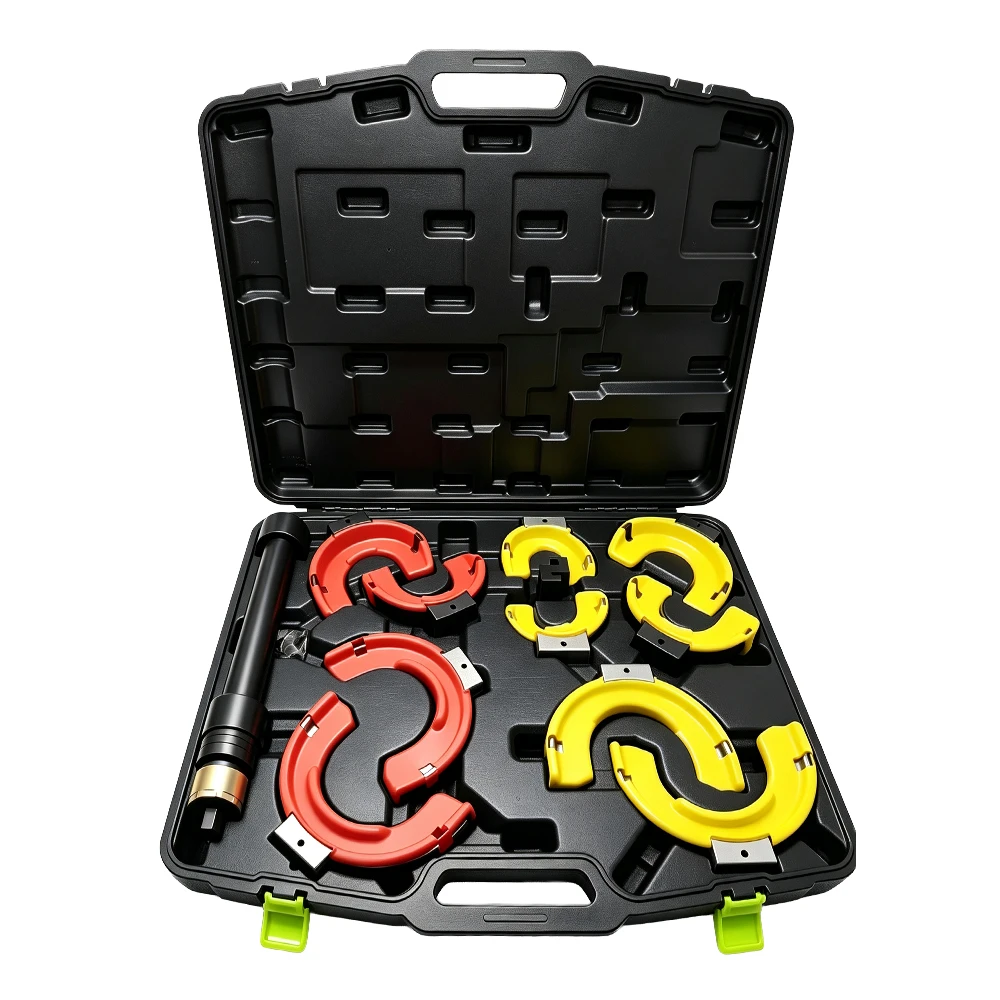
With the equipment unloaded and in the condition specified for inspection, compare the supplied pieces with the parts drawing. Look for visible cracking, distortion, wear, missing pads or signs that the part has been altered. The contact faces should match the parts specified for the tool and application. Do not approve a jaw simply because it slides onto the body; similar components can belong to different revisions.
A flattened or damaged pad can be easy to miss in a photo taken from above. Ask for a side view of the bearing surface and a view of the marking or attachment point. If the manufacturer calls for replacement when a pad is damaged or missing, record the part number and keep the equipment out of use until the issue is resolved. Do not glue on an improvised substitute or grind a jaw to fit a different coil.
Screw, nut, drive and thrust components
Inspect accessible threads and drive features according to the manual. Look for damage, corrosion, distortion and abnormal wear. Pay attention to the nut, bearings and other elements that transmit force, not just the visible end of the screw. Unexpected resistance or looseness requires assessment; applying more force is not a way to diagnose a suspect mechanism.
Record the permitted cleaning and lubrication instructions by model. A drive screw and a spring contact surface need not have the same maintenance requirements. For example, the Branick Model 7600 manual differentiates maintenance of the screw and thrust parts from keeping contact pads free of lubricant. Use that distinction to ask for clear documentation, and follow the manual for the actual model rather than copying Branick’s intervals to another compressor.
Pins, guards, retainers and supports
Check that each required retention or support part is present, identified and functional according to the tool manual. Look for an incomplete pin assembly, a bent keeper or a protective cover that cannot be secured. Use the manufacturer’s replacement criteria. A cover is a separate feature; it cannot compensate for an unsupported assembly or an incorrectly matched jaw.
If a shop finds a pin that looks interchangeable, record it as an unverified part until its identity and compatibility are confirmed. Put loose replacement pieces in labelled storage. When a station has several approved configurations, keep the components for each configuration identifiable so a shift change does not leave the next operator guessing what was installed.
Confirm the application and station before loading
Read the tool manual for approved spring and suspension types, jaw or plate combinations and applicable limits. Check the vehicle procedure for contact locations and support. Verify the spring condition and the available clearance. An in-range diameter is only one dimension: wire size, coil spacing, taper and access can prevent the specified engagement. If either document leaves the combination unresolved, stop and ask for clarification.
For fixed equipment, include the installation in the inspection. Check the prescribed mounting surface, fasteners, supports and surrounding access against the model’s instructions. If the station has moved or has been struck, review whether it needs recommissioning before release. A stable-looking stand is not evidence that its mounting and support conform to the instructions. Keep the installation record with the tool ID rather than with a generic inventory category.
Verify that the operator has access to the correct instructions and is trained for the equipment and task. A sheet printed for one compressor should not be reused merely because another has similar jaws. The OTC 7045B instructions, for instance, describe a specific front-suspension layout and call for checking the tool before use. The product’s own instructions determine what to check and how often; the example does not establish settings for other models.
Record defects in a way the next shift can act on
Keep a tool record with a unique identifier, model and revision, manual reference, date and person responsible. Add the part involved, its observed condition, an image if useful and the disposition. “Left jaw contact edge visibly distorted; tool withheld” is easier to act on than “compressor looks worn.” Write the observation before a diagnosis. If maintenance later confirms a different cause, add that finding without erasing the original report.
Use three distinct dispositions: released, held for clarification, or removed from service. “Held” is useful when an otherwise undamaged tool is missing fitment documentation or has an unidentified accessory. Visible damage, a suspected overload or a missing critical retainer calls for keeping the tool out of use and escalating under shop procedures. Make the status visible on the equipment and in the inventory. A note in a purchasing email is not sufficient if the tool remains available to operators.
If an abnormal condition is observed under load, follow the model’s instructions and shop emergency procedure. Do not approach the loaded assembly to take inspection photos or improvise a repair. The review can document the event afterward when qualified personnel have made the equipment safe. A record should establish who controlled the response and what evidence was available before any return to service.
Request a useful supplier photo set at receiving
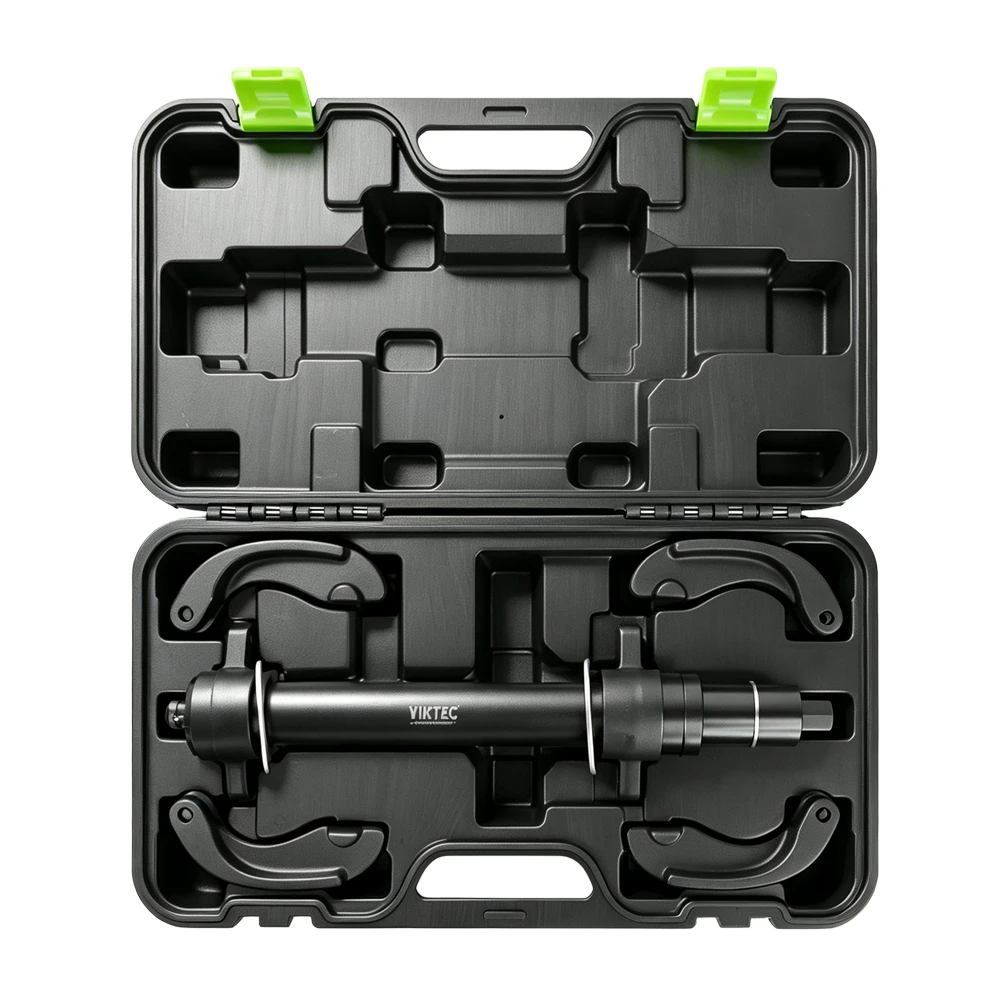
Ask for images of the supplied configuration and marked parts. The point is to identify what arrived and compare it with the approved order. Ask the receiver to photograph the equipment before distributing it to bays, with the parts unpacked and unloaded. These photos are condition and identity records. They do not verify load capacity, certify a test or replace the physical inspection required by the manual.
- Overall view of the model and a readable view of its identification or rating label.
- Both sides of each jaw or plate, showing contact faces, markings and locking features.
- Drive and threaded parts visible under the manual’s inspection procedure.
- Retainers, covers, supports and any separate mounting hardware as delivered.
- Document cover or revision, contents list and any replacement part references.
Compare photos with the quotation and parts list. For example, if a receiving pack shows two lookalike plates but the manual calls for different marked sizes, resolve the mismatch before releasing the set. Similarly, if a guard appears in a catalogue photograph but is not in the itemized quote, ask whether it is required, supplied or a separately ordered item. Keep the written answer with the purchase record so later replacement orders use the same basis.
For the VIKTEC VT01032C coil spring compressor or another model in the suspension and steering tool range, specify the SKU and intended job list. Request model-specific instructions, parts information and a trade quotation. Include quantities, market and any separately priced spare parts the workshop needs.
Buyer questions
What should a workshop do when a replacement part arrives without identification?
Hold the replacement part apart from approved stock and request the part reference and model compatibility in writing. Compare the response with the manual and original order before anyone installs it. If its identity remains uncertain, keep it out of the equipment inventory. A matching shape or thread does not show that the part was intended to transmit load in that tool.
What is useful to record when the same fault is reported twice?
Keep both reports, even if the symptoms sound identical. Note which tool and part were present, which configuration the workshop intended to use, and whether the previous issue was assessed and released. The recurrence may involve a different setup or a replacement part, so the responsible person needs enough information to distinguish the cases. Do not reopen the tool for use merely because the first report was closed.
How should the receiving team handle a model substitution on the invoice?
Ask purchasing to compare the proposed model with the original approved order, including the jaw set, limits, mounting requirements and service parts. Reopen the acceptance decision if the equipment or required configuration has changed. Release it only through the same documented review used for the original selection.
Can a new compressor be released on the basis of the packing list alone?
No. The packing list helps verify the order, but receiving also needs a condition and documentation check. The workshop still needs to confirm the approved setup for the actual job and carry out its pre-use check.
Can a worn jaw be replaced with a part from another set?
Only consider a part documented as compatible by the tool manufacturer for the model and revision. Visual similarity does not establish fit, retention or load limits. Keep the equipment out of use until the correct part and any required review are in place.
What should happen after a compressor is dropped?
Remove it from the available equipment and record the event. Follow the manufacturer’s assessment and return-to-service requirements. Lack of obvious external damage is not enough to clear a tool with a known incident history.