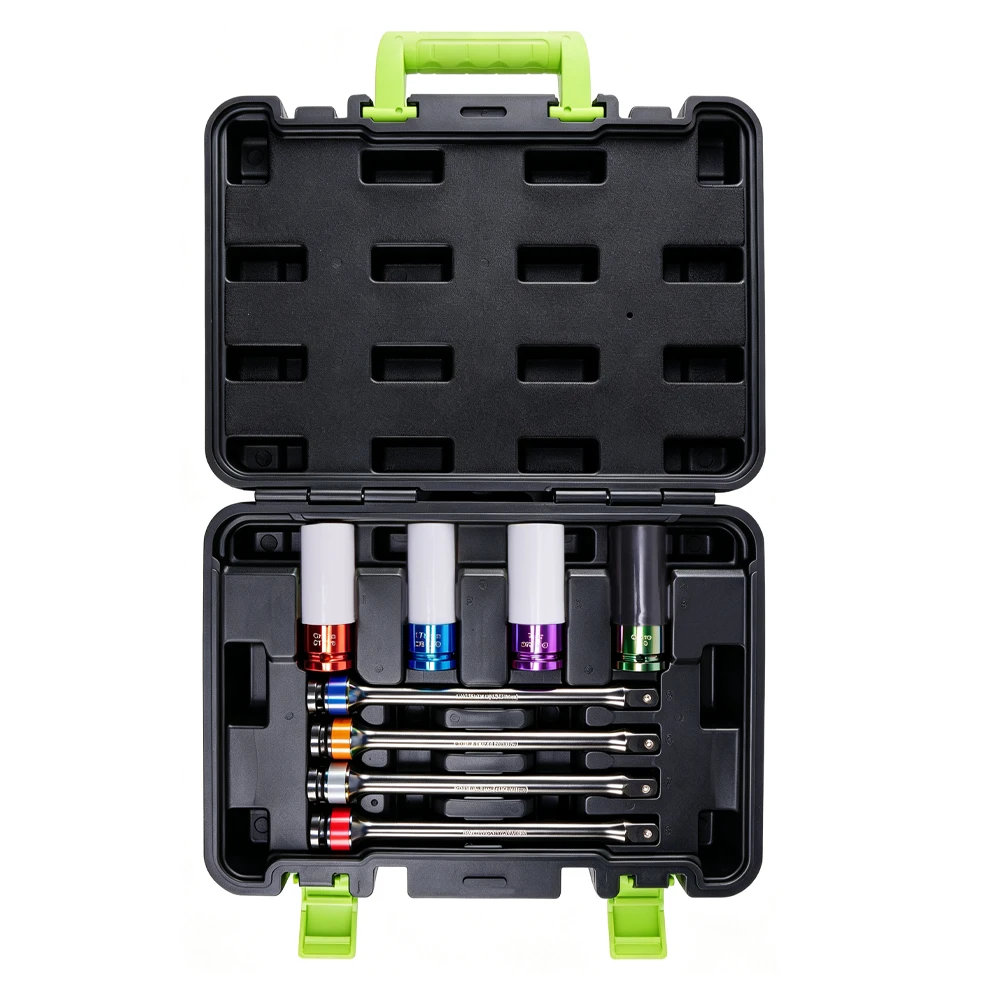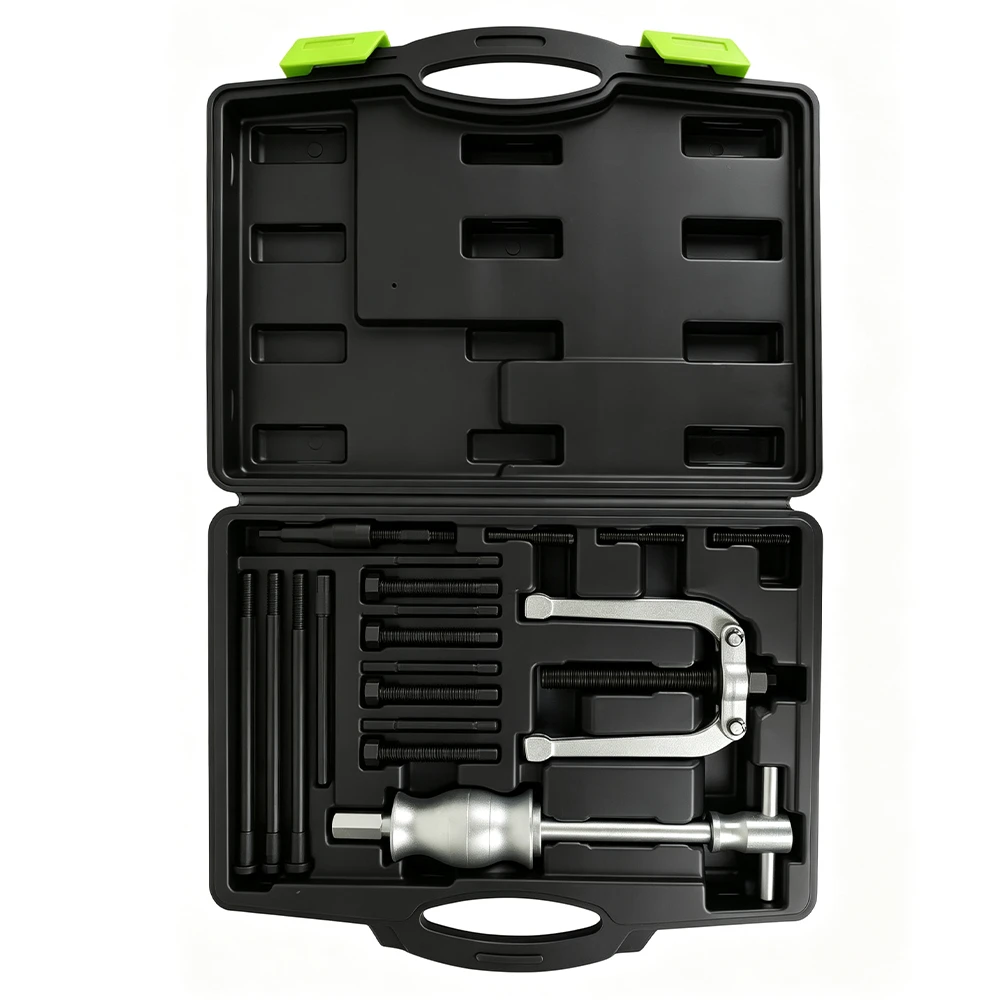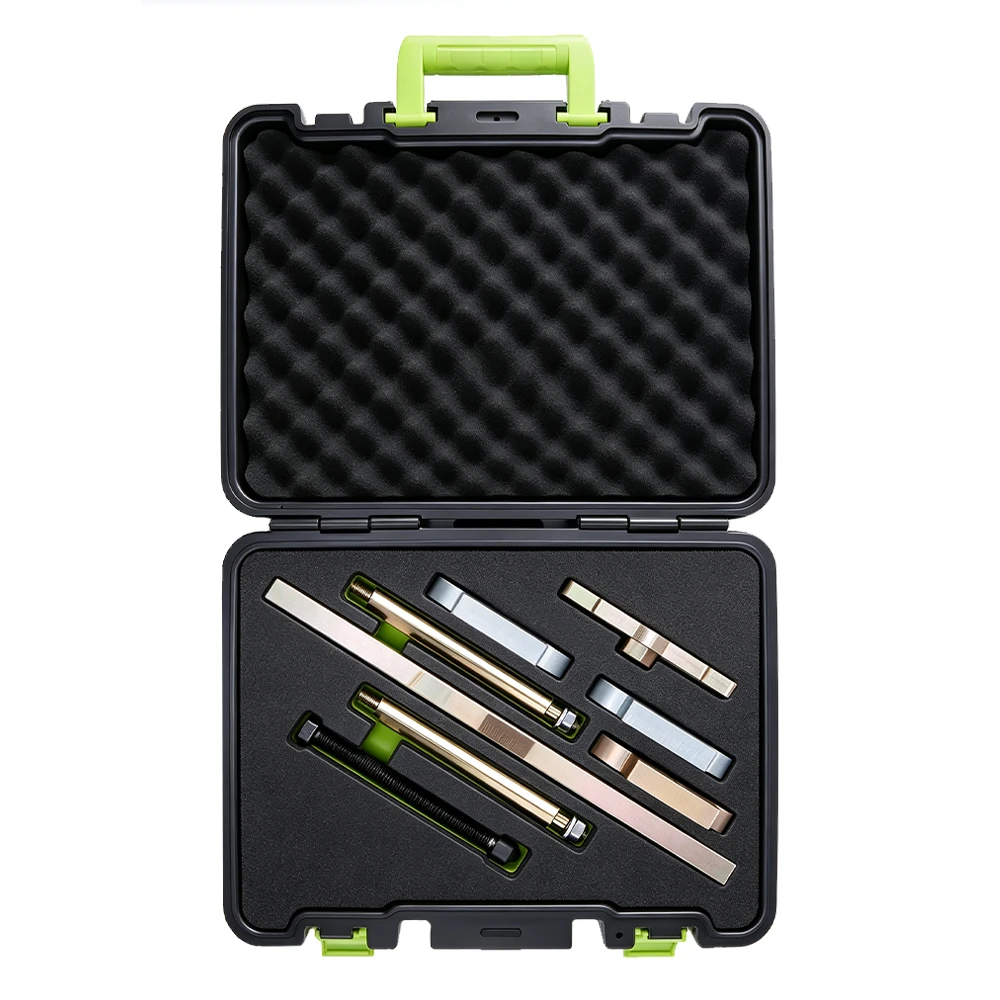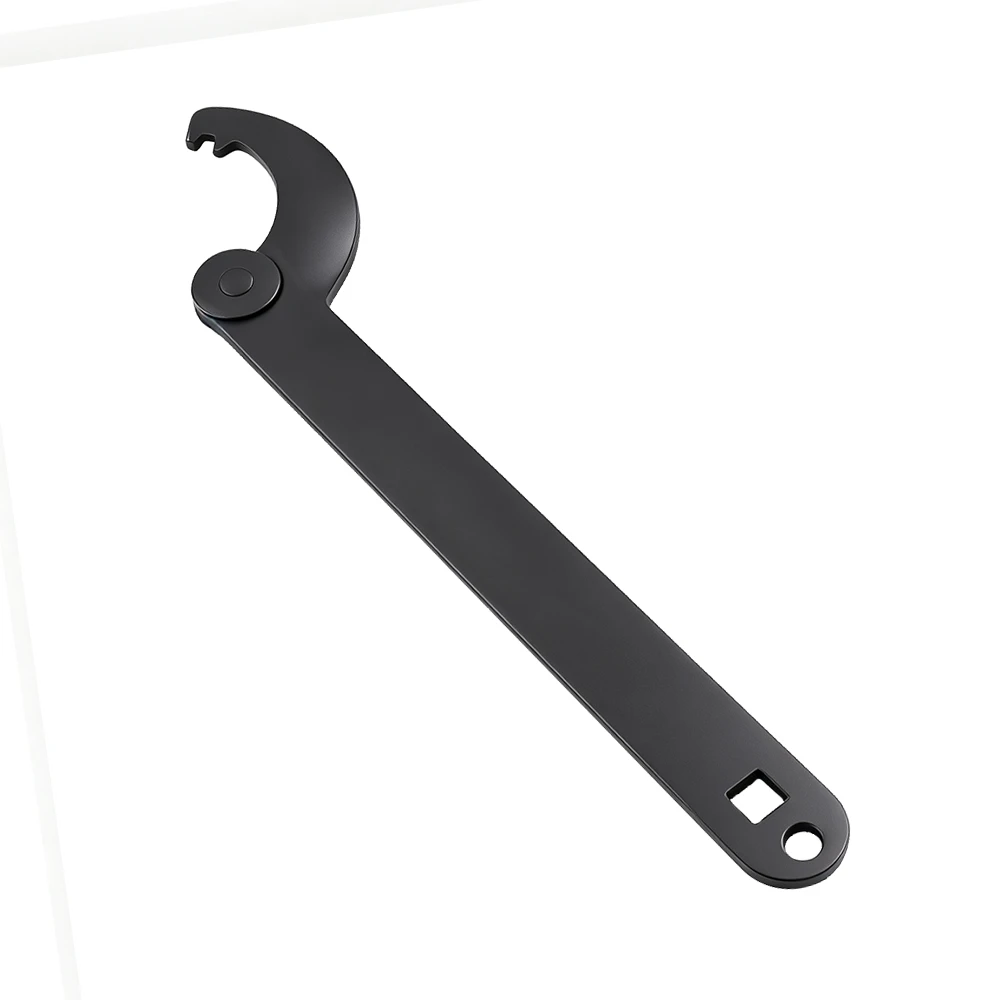
A ball joint separator releases the joint’s tapered stud from its mating connection. A ball joint press removes or installs a press-fit joint housing in an arm or knuckle. They work on different interfaces, so a workshop may need both during the same repair. Buying one does not automatically cover the other’s task.
For importers and distributors, this distinction should be clear in product names, application tables and quotations. Customers often ask for a “ball joint removal tool” without identifying which connection they want to release. Establishing that first prevents a technically correct tool from being supplied for the wrong operation.
One joint can involve two different removal jobs
Think of the assembly as two connections. The stud connects the joint to another suspension or steering component, often through a tapered seat. The joint housing is retained in its mounting component by the design used for that application. Releasing the stud leaves the housing retention question unchanged.
A separator enquiry concerns the stud connection and the tool access around it. A press enquiry concerns a housing that is designed to be removed and installed by pressing. Some joints use other retention arrangements or are serviced with a larger assembly, so identifying a ball joint does not automatically establish the need for a C-frame press.
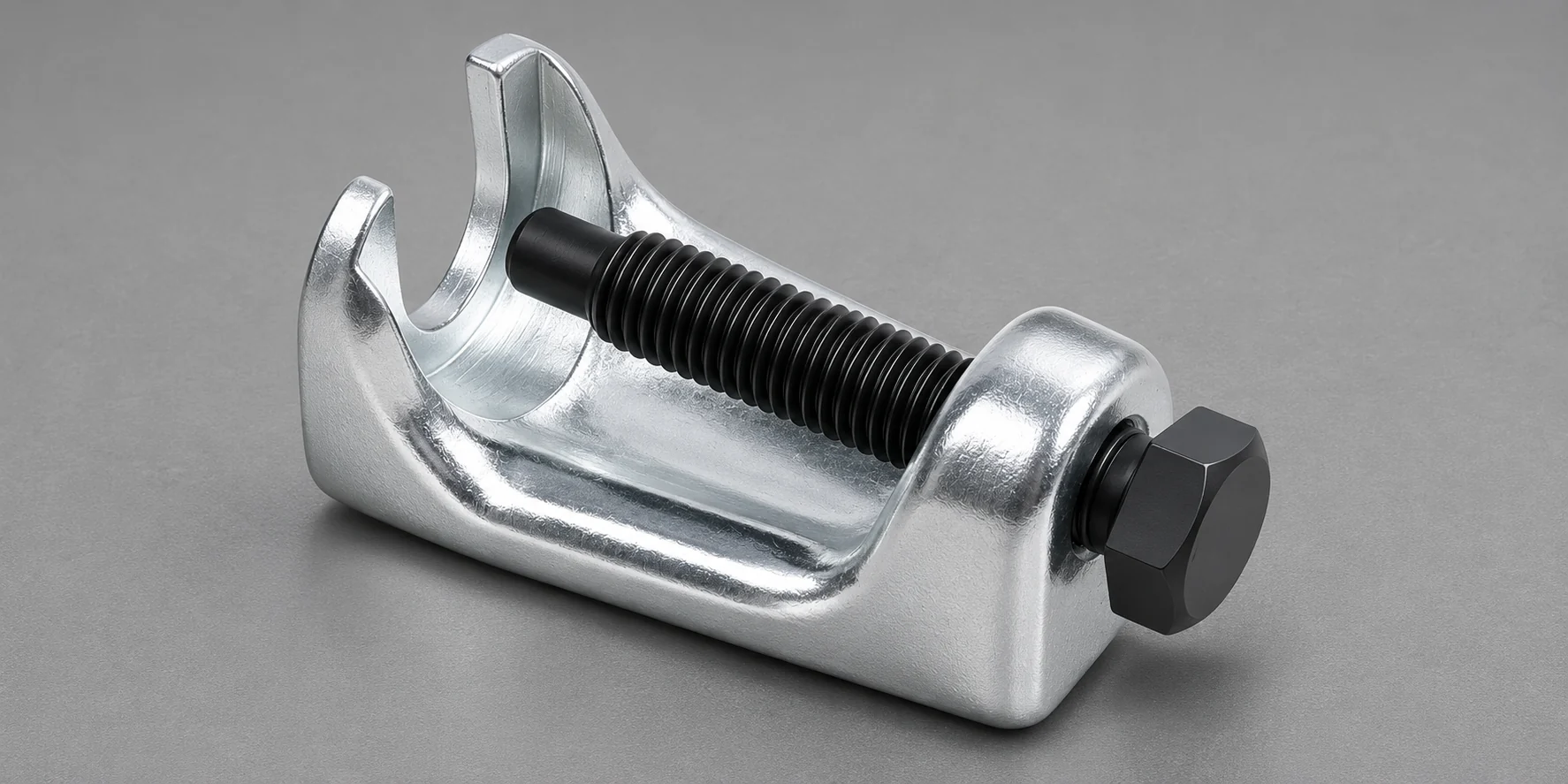
OTC’s ball joint separator listing describes separation at the spindle support arm. Its ball joint press instructions address press-fit housing service using receiving tubes and adapters. These are distinct tool functions, even though both may appear under “ball joint tools” in a catalogue.
Compare the tools by interface and required dimensions
| Question | Ball joint separator | Ball joint press |
|---|---|---|
| Which connection is addressed? | The stud and its mating connection | The press-fit housing and its mounting bore |
| What is the primary task? | Separate the connection for service | Remove or install the specified press-fit component |
| Which dimensions matter? | Jaw or fork opening, reach, adjustment and surrounding access | Frame opening, throat reach, driver profile and receiver dimensions |
| What must be protected or cleared? | Relevant stud, boot and surrounding component features | Housing features, boot or stud projections, and arm or knuckle geometry |
| What confirms suitability? | Application and operating information for the separator design | Approved frame-and-adapter arrangement for the specific joint |
The dimensions are not interchangeable. A separator’s maximum opening cannot be used to choose a press receiving cup, and a press kit’s tube diameter says nothing about whether a separator can reach the tapered connection. Keep these fields separate in product data.
Select a separator around access and the intended repair
Screw-operated separator designs
A screw-operated separator needs an appropriate opening, contact arrangement and working envelope for the connection. Check access to operate it as well as space to position it. A tool that fits around the joint in a photograph may still be obstructed by the arm, brake assembly or nearby structure.
If the joint is intended to remain in service, include that in the enquiry. The supplier can then identify the applicable tool design and instructions. Do not describe any separator as guaranteeing an undamaged boot or reusable joint under all conditions; the initial condition, access and operation still matter.
Fork-style tools
A fork-style separator is a different approach to the connection. Confirm whether that design is appropriate for the repair and whether preservation of the boot and joint is required. Do not recommend a fork solely because the opening appears to fit. Its permitted use should be established from the tool and vehicle information.
For a trade assortment, describe the design and intended application plainly. Avoid grouping a fork and a screw separator under one “universal” capability statement when their access requirements and implications for the repair can differ.
Passenger-vehicle and heavier applications
A broad duty label is not a size specification. Request actual opening, reach, contact geometry and applicable limits for each proposed separator. A larger tool can be unsuitable in a confined passenger-vehicle application, while a compact tool should not be assumed to cover a heavier connection.
Select a press only after confirming press-fit housing service
Identify the vehicle, joint position and replacement-part reference. Establish the housing retention design and the permitted service method. If the joint is screw-in, bolted or part of an assembly replaced as a unit, a general press-fit assumption can lead to the wrong tool purchase.
For a confirmed press-fit application, the frame must accommodate the complete stack and reach the joint axis. The adapters must contact the intended housing surfaces, and the receiver must clear the component’s movement while supporting the specified area. These are application requirements, not features established by the C-frame’s appearance.
Removal and installation may use different adapters or arrangements. Ask for both diagrams when reviewing a kit. The contents should be identifiable by reference so that a technician can select the specified component and a buyer can later order a replacement.
Do not infer impact-wrench compatibility from a hexagonal forcing screw or a broad “professional” description. The approved drive method and operating limits must come from the instructions for the actual tool system.
Three customer requests that need different quotations
“We need to disconnect the arm for another repair”
First clarify whether the request concerns releasing the stud connection and whether the joint is intended to be retained. That may lead to a separator enquiry rather than a housing-press kit. Ask for photographs showing the connection and surrounding access, not just the vehicle name.
The quotation should identify the proposed separator and its documented application. It should not add a press kit as though the housing must always be removed whenever the tapered connection is separated.
“We are replacing a press-fit ball joint”
The workshop may need a separator for disconnection and a press system for housing replacement, depending on the vehicle’s service route. Quote the required functions separately and explain what each kit supplies. This is clearer than selling one loosely named “removal kit” that leaves part of the job uncovered.
Request the replacement-joint reference and application-specific adapter information. If the existing kit lacks an installation component, include that gap in the quotation rather than relying on the workshop to discover it during assembly.
“We want a distributor range for mixed workshops”
Group demand by task: tapered-connection separation, press-fit housing service and application-specific additions. Then identify representative vehicles and sizes within each group. This creates a range that sales staff can explain without claiming every tool covers every ball joint.
For initial stock decisions, use actual customer requests where available. Keep unusual applications separate from the core range and request a specific review when needed. More pieces in one case do not automatically create a more useful commercial assortment.
Write catalogue descriptions that prevent confusion
Put the service function near the product name. “Separator for releasing the ball joint stud connection” and “press kit for specified press-fit joint housings” tell the customer more than “heavy-duty ball joint remover.” Use terms that match the supplied instructions and actual contents.
List the dimensions relevant to that function. For separators, show opening and access information. For press kits, show the frame and adapter specifications or provide the application chart. Do not transfer a vehicle list from a visually similar kit or assume a broad model name covers every production variant.
Keep trade claims separate from technical coverage. Packaging, instruction language, quantities and market documentation are quotation requirements. They should not be presented as confirmed supplier commitments until the proposed scope has been reviewed.
Inspect samples for a complete, explainable service scope
For a separator, reconcile its identification and dimensions with the quoted model and review the operating instructions. For a press kit, also reconcile every adapter with the contents list and application information. A case full of unmarked cups can be difficult to support even if the parts appear well made.
Where a functional evaluation is appropriate, use qualified personnel and a documented application. Record the tool configuration and the task performed. A demonstration of stud separation does not validate housing installation, and a housing-press demonstration does not establish that a supplied separator fits the same vehicle.
Agree acceptance requirements before the order. These can include dimensional checks, component identification, condition and documentation. Avoid an improvised overload test or an unqualified claim that a sample test proves unlimited durability. Keep the evaluation tied to the buying question it was designed to answer.
Plan spare parts and customer support by tool family
A short intake form for an ambiguous removal-tool request
Ask the customer to identify the connection on a photograph: the stud entering its mating component, or the joint housing seated in the arm or knuckle. Next, ask whether the joint will be replaced or retained, and whether the customer needs removal only or a complete replacement-tool scope. These questions usually narrow the enquiry more effectively than asking for a preferred kit size.
Then record the vehicle and part references, available access and equipment already owned. If the customer already has a press frame, identify it before quoting additions. If the request concerns only separation, avoid presenting an adapter assortment as though it resolves the access question at the stud connection.
Keep the resulting scope with the quotation. It gives both parties a clear record of the task the proposed tool is intended to perform, which is valuable when a later order uses the same informal description of “ball joint remover.”
Ask which operating screws, contact components and adapters are available separately for the selected products. Record the references and the supplier’s stated service route. A press-kit receiver and a separator component are different spare-parts requirements even when they serve the same customer.
For distributors, a simple enquiry form can improve after-sales diagnosis. Ask which operation was attempted, which vehicle and part were involved, which tool model was used and where the difficulty occurred. This helps distinguish missing coverage from an incorrect configuration or a component requiring inspection.
The VIKTEC ball joint service tool range is the appropriate starting point for these two tool families. For a press-kit enquiry, the 21-piece master ball joint press kit provides a specific product reference. Confirm the current contents and application information against the intended vehicles.
Questions buyers ask about presses and separators
Is a separator also an installation tool?
Do not assume so. Its primary role is separating the specified connection. Reassembly follows the vehicle and component procedure. A separator listing does not establish a method for installing a press-fit housing or tightening the completed connection.
Can a press replace a separator if the C-frame fits?
Physical fit is not sufficient. The frame and adapters must be approved for the intended task and contact arrangement. Use a separator designed for the connection unless the tool manufacturer explicitly documents another suitable configuration.
Does a combined kit always contain everything for a complete repair?
No. Check its contents and application information stage by stage. It may combine several useful functions while still requiring vehicle-specific adapters or separately supplied equipment. Ask the supplier to identify those requirements in the quotation.
What information should accompany an order enquiry?
State whether the requirement is stud separation, housing replacement or both. Include vehicle and joint references, access photographs, required quantities and destination market. Request a ball joint tool quotation by service task so the proposed products match the actual work.