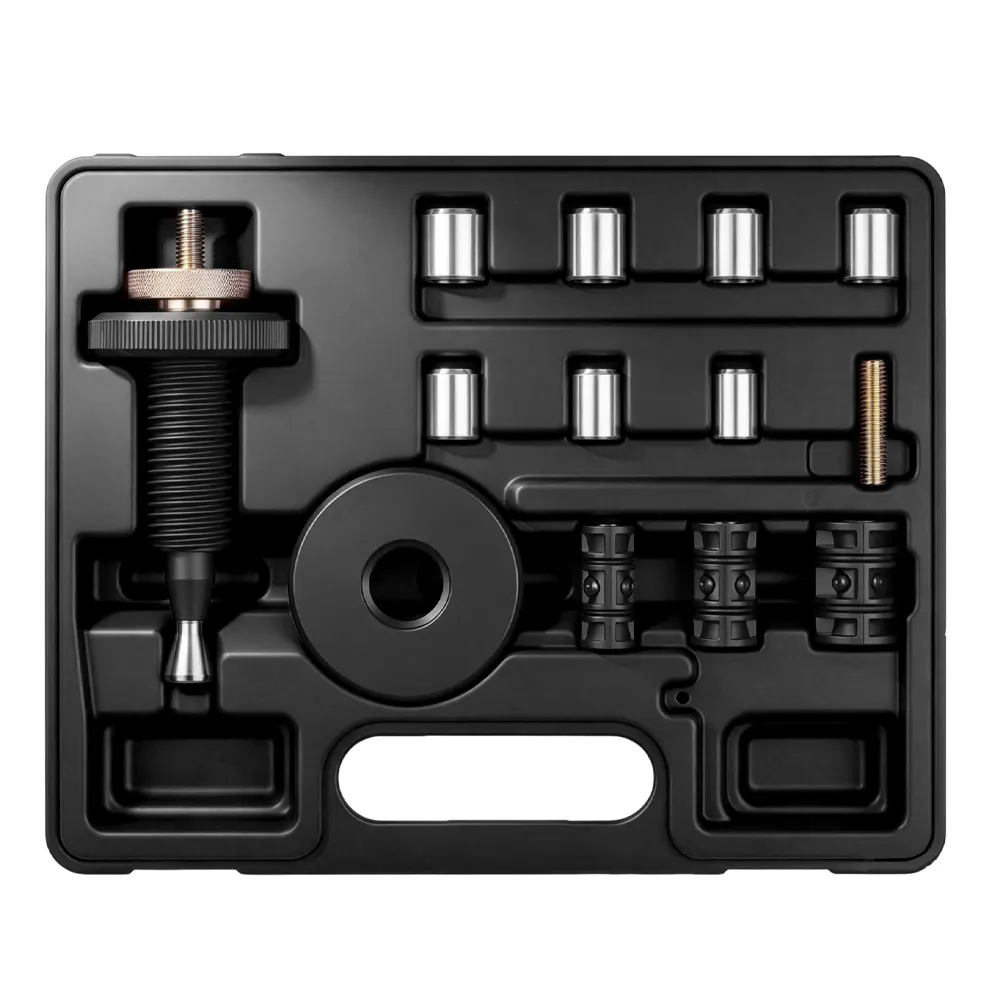
Choose a wind-back tool when the vehicle procedure calls for rotating the piston while it moves inward. Choose a straight compressor when the piston is specified to return axially. On a fixed multi-piston caliper, the job may also need a spreader that supports more than one piston at a time. The axle position and shape of the piston face can help identify the caliper, but they do not establish the correct method on their own.
For a trade order, first find the service procedure for the actual caliper. Then match the adapter, force direction and space inside the caliper. That is a better basis for an assortment than ordering one large case and calling every included disc a fit for every rear brake.
Compare the movement the tool has to produce
| Service requirement | Tool to evaluate | Fitment evidence |
|---|---|---|
| Rotate and retract the piston as specified | Wind-back spindle, reaction plate and compatible face adapter. | Direction of rotation, pin spacing and profile, clearance and any required final piston orientation. |
| Return a piston along its axis | Compatible straight compressor, press plate or spreader. | Approved bearing surface, initial opening, pad clearance and usable travel. |
| Return opposing or multiple pistons | Spreader or compression assembly with suitable plate coverage. | Which pistons must be supported, their spacing and the caliper opening. |
| Move an electronic parking brake mechanism to a service state | Vehicle-approved diagnostic or service function, followed by the specified mechanical tooling. | Exact vehicle and brake configuration, required routine, then the specified movement of the piston. |
In a wind-back setup, the adapter has to stay positively engaged with the designated face features as the tool applies the required movement. The reaction plate also needs a sound support surface. A spindle can move smoothly on the bench and still be unusable on a caliper because the plate will not seat. In a straight compression setup, check that the contact plate can apply the required axial load without loading the dust boot or rocking against an edge.
Manufacturer tool literature shows why these details should be separate in a catalogue. Sealey sells a wind-back tool with both left- and right-handed configurations. Lisle separately lists a dual-piston compressor and a pad spreader. These describe different tool mechanisms and different intended jobs. Use the vehicle procedure to decide which one belongs on the job sheet. Sealey wind-back tool data · Lisle piston compressor and spreader range
Match the face adapter after confirming the method
Record the diameter and working features of the piston face. For a pinned adapter, check the spacing, pin profile, height and the way the adapter fits the spindle. The pins must enter the features specified by the procedure. A plate can look close in a photo and still seat against a radius or slip out as the piston turns. Check the available space around the edge of the face as well as the centre. A larger adapter may contact the boot before its pins are fully seated.
Then record the required rotation independently of the spindle description. The spindle’s handedness describes the tool thread. Which spindle and direction the technician uses depends on the tool instructions and the vehicle procedure. Kit labels do not establish a rule for every left or right caliper. A stock sheet that lists only left and right leaves the technician guessing whether those words refer to the car, the thread or the direction of rotation.
For a straight compressor, the equivalent checks are the contact area and the available room for the press plate and driver. A compact single-piston tool may be easier to place in a small opening. On a caliper with multiple or opposing pistons, evaluate whether the plates can cover the approved contact surfaces together. Pressing one piston in isolation can allow another to move if the service procedure calls for simultaneous support. Check the exact caliper and its procedure before loading the tool.
What electronic parking brake changes
An electronic parking brake can add a diagnostic requirement before the piston is touched. Find out how the vehicle releases or parks the mechanism for service, what the technician needs to see before starting mechanical work, and how the system is returned to operation afterward. A rewind spindle cannot perform a diagnostic routine. A diagnostic command also does not tell you that the piston should be rotated. It prepares the assembly as described in that vehicle’s instructions.
Tesla’s integrated parking brake caliper procedure for the 2012–2020 Model S gives one documented example. It calls for EPB service mode and describes using a caliper spreader during the rear work. The same document refers to the required slot orientation on reassembly. The presence of slots on a piston face therefore cannot decide the movement on its own. The example applies to the named procedure and configuration. Tesla integrated parking brake caliper procedure
When a buyer says a kit must cover all EPB work, ask which vehicles and brake variants the shops actually service. Write a separate field for the required diagnostic function and the mechanical contact. If the fleet has changed software or brake hardware, verify the applicable instructions rather than copying the configuration from an earlier model year. A supplier may confirm the contact plate while a workshop confirms access to the diagnostic equipment.
Diagnose the failed fit before substituting a tool
If a wind-back disc climbs out of the piston face, check the pin engagement, the centring of the spindle and the reaction plate. Check the permitted movement against the actual caliper. A slipping tool can leave marks or damage nearby rubber, and more force can make the failure harder to diagnose. A correct adapter should have the intended contact before it is loaded.
If a straight plate rocks or the piston starts to move unevenly, look at the contact geometry and the condition of the assembly. On an opposing caliper, one plate may reach the face of one piston while touching the edge of another. Recheck the position and required support. If there is unexpected resistance, stop and verify the parking mechanism state, tool alignment and service instructions. Investigate corrosion, binding or damage as directed by the workshop procedure.
When a kit comes back to a distributor, ask for the caliper reference, axle, the procedure’s required movement and a photograph of the unloaded setup. That evidence helps distinguish a missing adapter from a caliper that requires a different method. Do not change the published fitment list on the basis of a photograph that does not identify which surface the tool was meant to contact.
Set up two inventory lines for a mixed workshop
A shop handling a variety of mechanical rear calipers may need a wind-back set with documented pin patterns and spindle choices. A shop seeing fixed calipers with opposing pistons may need a separate plate assembly. If your customers need both, ask for coverage and spare parts for each, then decide whether a combined case is practical. The technician should be able to identify each part and its role without testing it on the piston under load.
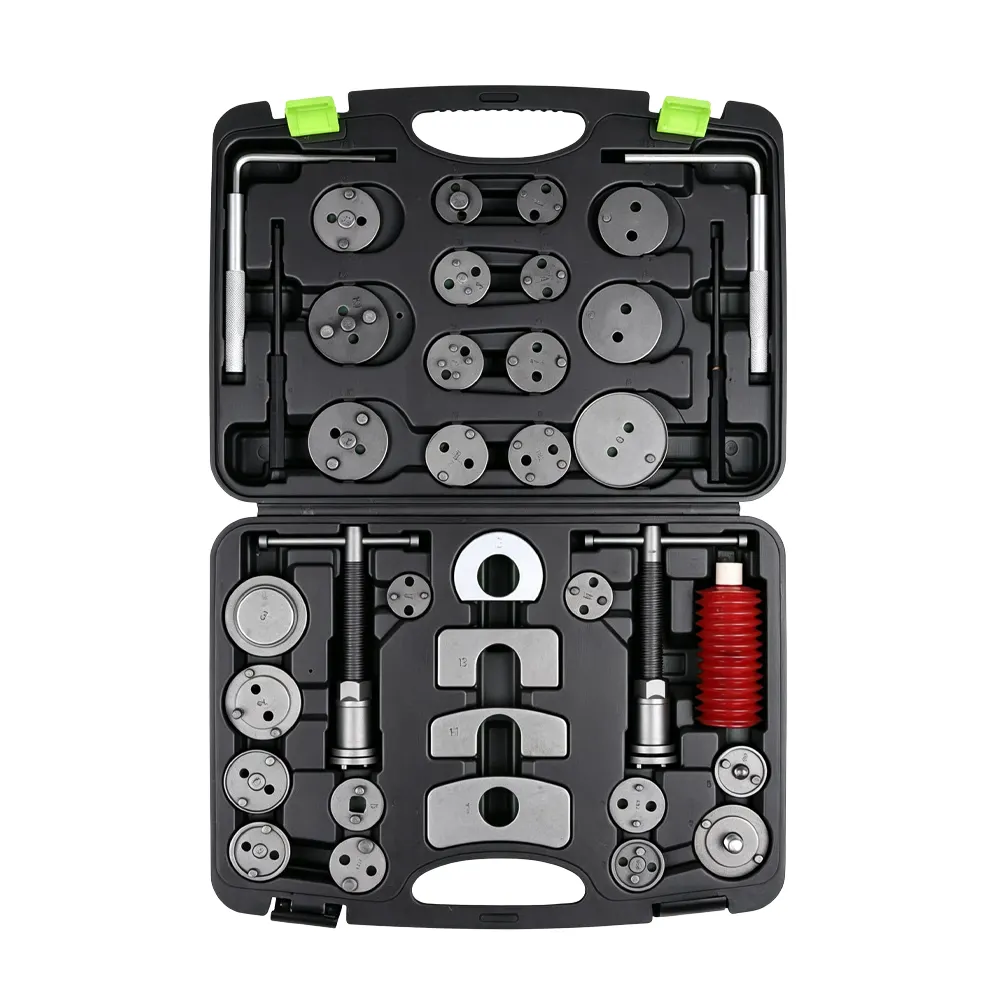
The VIKTEC VT01026B 37-piece brake caliper wind-back kit lists interchangeable adapters and left- and right-handed thrust bolts. Ask for the parts breakdown and verify which tools support the specific applications. A kit described as able to push and wind still needs the correct plate, contact and access for each job. Browse the VIKTEC brake caliper and piston tool range for alternative tool formats.
Use a sample acceptance sheet with one line per caliper. Record the OE or caliper identifier, expected movement, plate or disc number, spindle, bearing surface, clearance and workshop result. Add a second sheet for service parts so replacement pins, plates or threaded pieces can be matched to the kit revision. A useful comparison captures what a kit actually covers before comparing price or the number of pieces in the tray.
For instance, a two-depot buyer can request one sample for the mechanically operated rear caliper used by the first depot and a separate plate setup for the opposing-piston caliper used by the second. A physical fit sample belongs with each confirmed service procedure. If one depot later changes the caliper it uses, the other depot’s sample result can remain in the record without extending it to the replacement assembly. This is a practical way to maintain a narrow and reliable application list.
Record the evidence before assigning a kit to stock
A sample assessment can distinguish three outcomes. The first is a documented wind-back application with an identified spindle and disc. The second is a documented axial compression application with an identified plate. The third is a fit that remains open because the caliper, its procedure or the required hardware has not been identified. Put the confirmed tool number next to the service reference in the first two cases. Keep an open application out of the product listing until the workshop can resolve it.
Ask the supplier to identify combination setups where the same case supports several tool arrangements. For example, a disc can serve as a contact adapter in one arrangement while a separate plate provides the reaction point. Make clear which pieces the operator needs to take out of the case and which are substitutes for a different application. That helps a receiving team check the case and makes a replacement-parts order easier to review.
When documenting a mixed kit, label the axial and rotational applications on different lines. If a buyer needs only one operation for a known fleet, that record may justify a smaller dedicated tool. A repair chain handling many different assemblies may instead need both formats at each site. The tool comparison is useful when it leads to a clear list of jobs and the specific hardware assigned to them.
Questions to resolve before buying
How can I tell whether a piston needs winding or straight compression?
Identify the actual caliper and check the applicable service instructions for the retraction method. Note any parking brake procedure before looking at the face. A slot can also be used for orientation, so its presence is not a reliable decision by itself.
Why do some kits include left- and right-hand spindles?
Different applications and tool setups call for different spindle and rotation combinations. Use the spindle and face adapter indicated by the tool instructions for the vehicle’s required movement. Ask the supplier how each spindle is identified in the case and as a spare part.
Does an electronic parking brake require a service mode?
Many applications specify an electronic release or service routine. Check the exact model, year and caliper procedure. Confirm the required equipment, how the routine is verified and which mechanical action follows. Treat a fault or incomplete routine as a reason to stop and consult the service information.
Send the caliper or OE reference, vehicle and axle, required piston movement, face details, available clearance and intended order quantity. If your workshops also service EPB calipers, include the applicable service procedure reference. You can request the automotive tool catalogue or ask for a brake caliper tool trade quote with your application list.