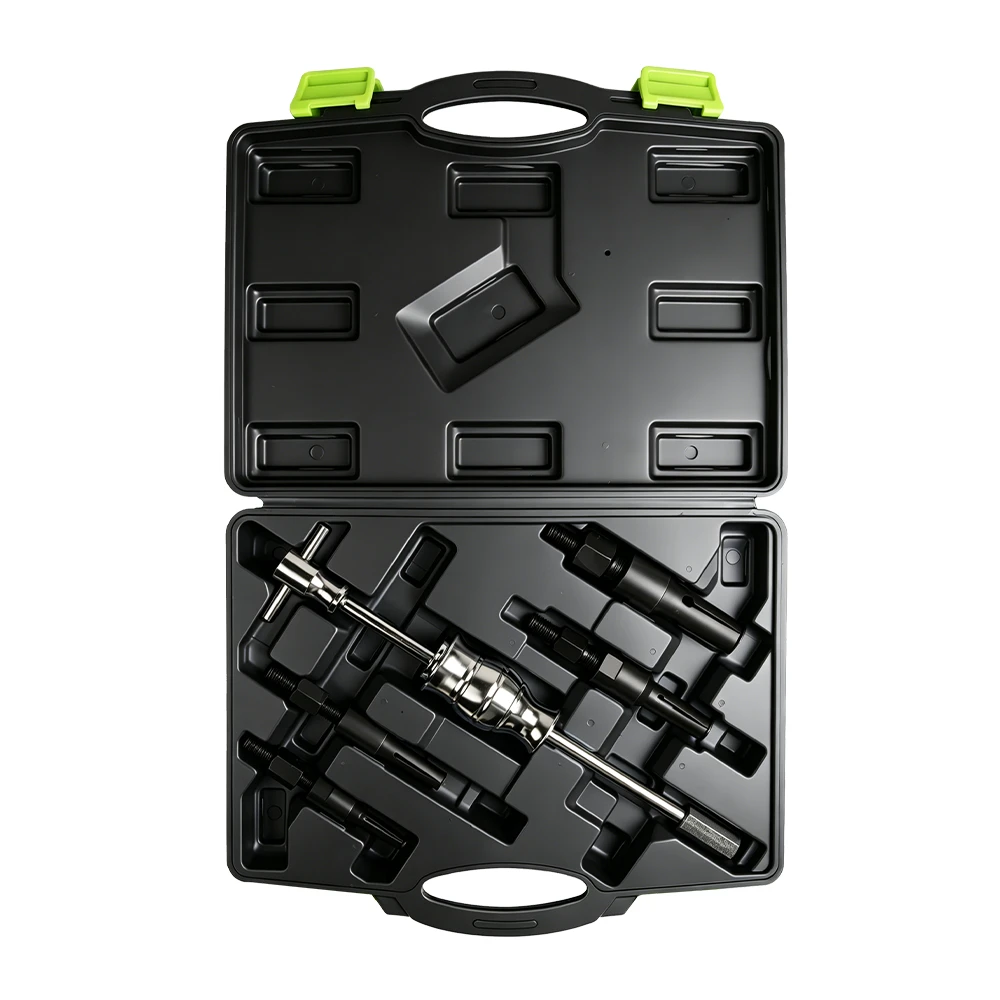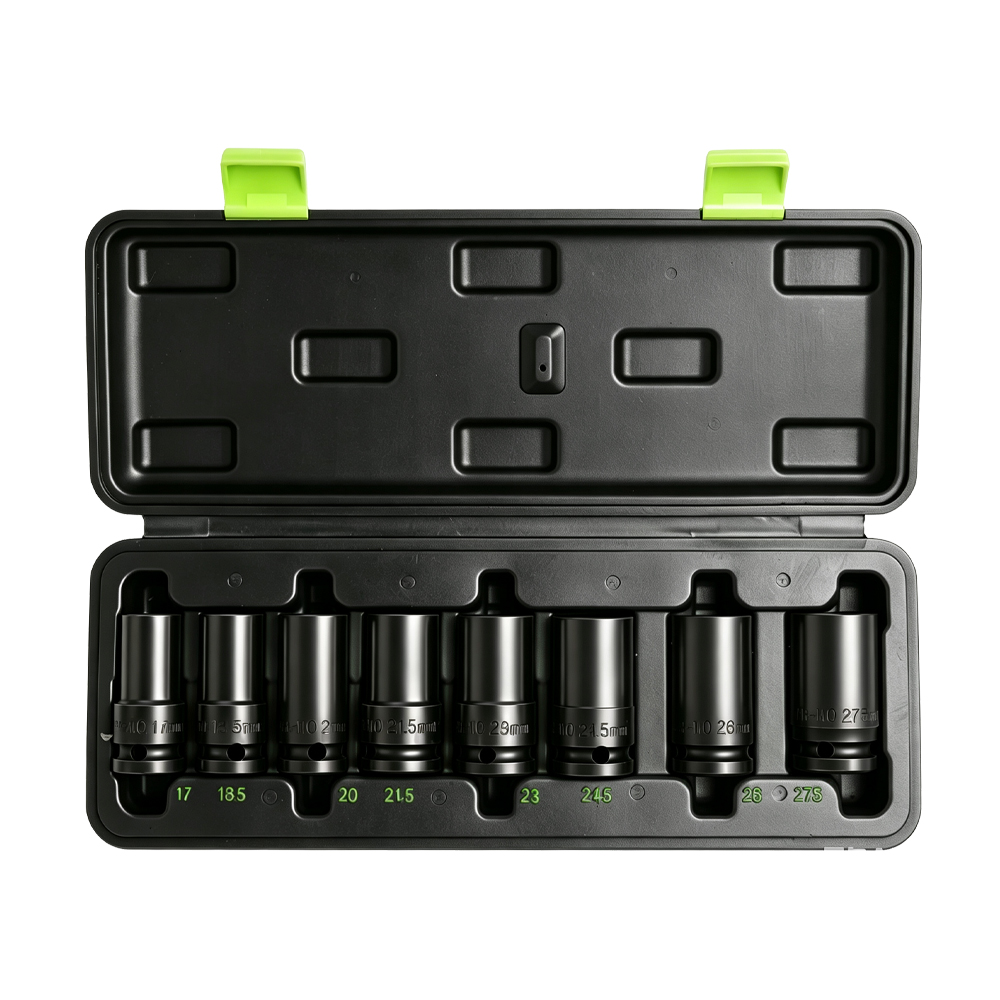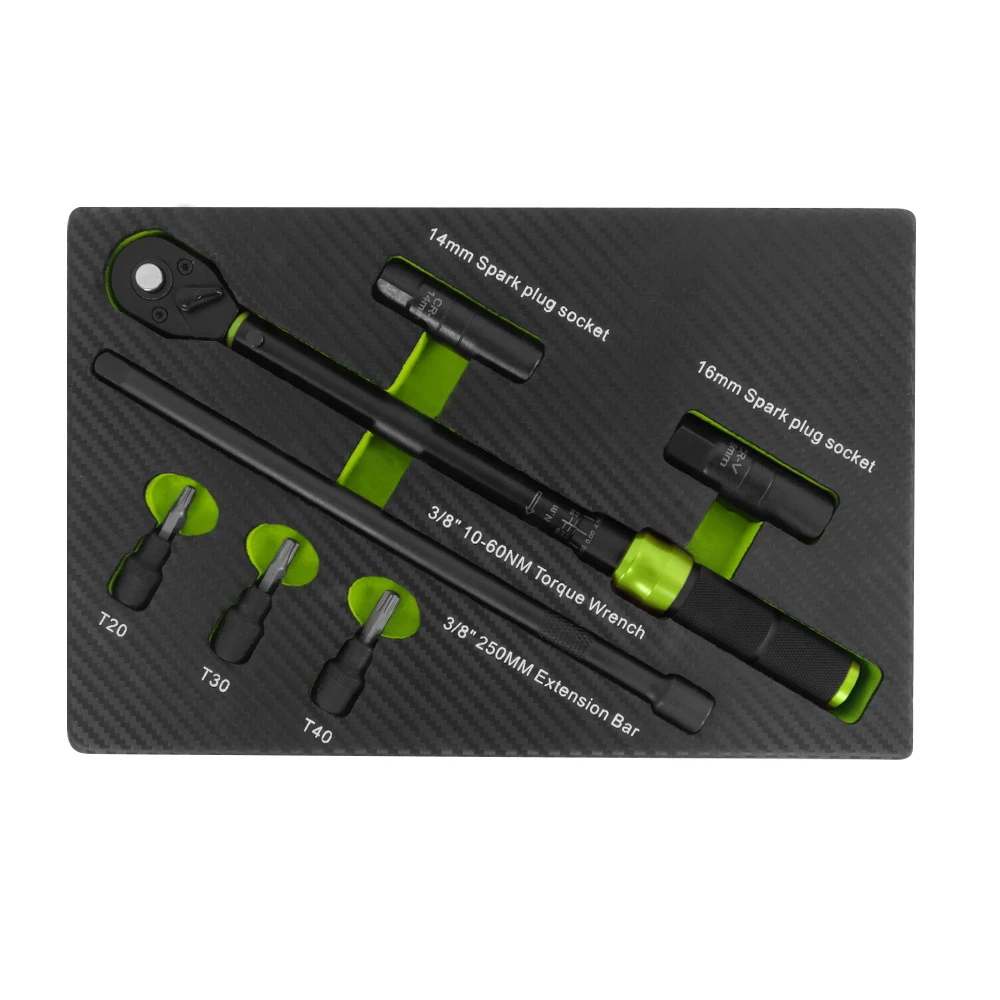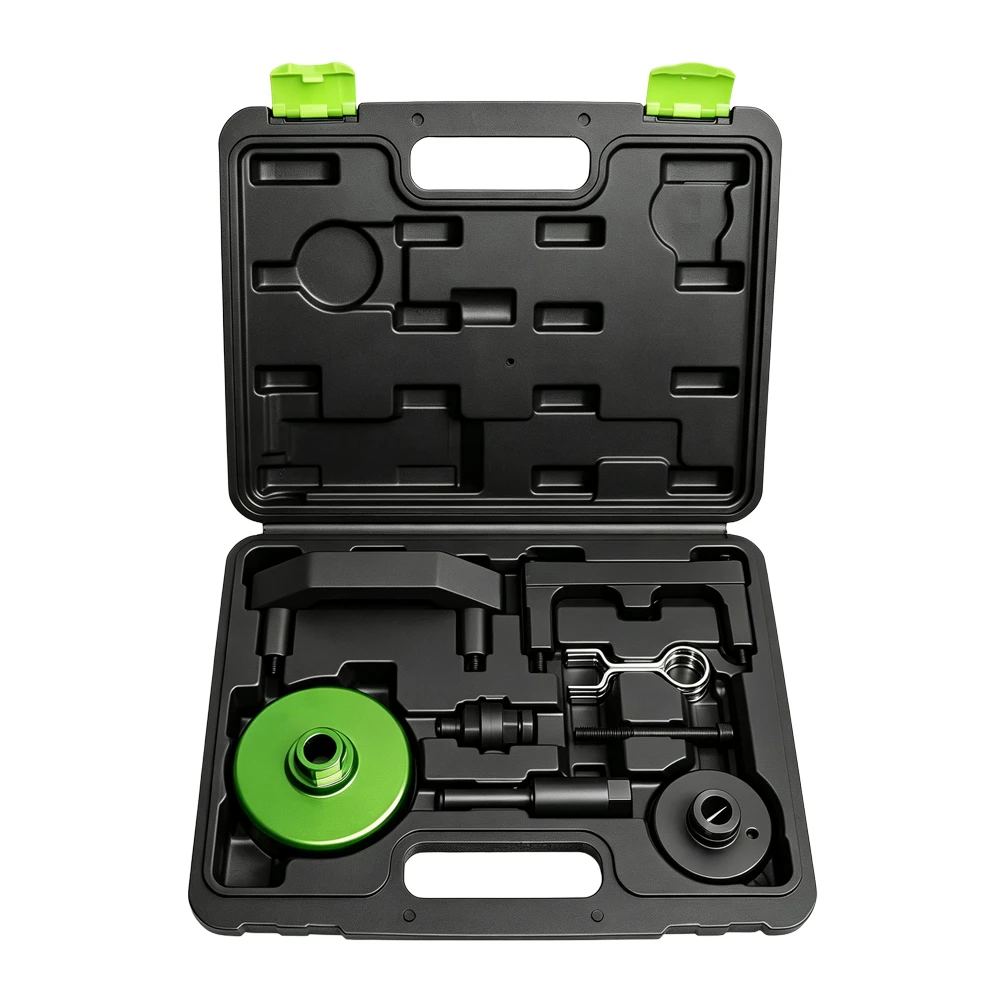
Professional automotive tools can lose value before the customer even opens the package. Weak cases, poor internal protection, inconsistent printing, and generic packaging can cause shipping damage, reduce perceived quality, and make a brand difficult to distinguish from competitors. For wholesalers and distributors, these problems also create returns, replacement costs, and additional after-sales work. The solution is not simply a better box. Effective OEM packaging should combine product protection, brand presentation, transport efficiency, labeling accuracy, and market compliance. For automotive tool brands, this may include custom blow-mold cases, color boxes, blister packaging, foam inserts, cartons, branded labels, and multilingual instruction manuals. A structured OEM and ODM packaging program helps turn the packaging itself into part of the product value.
The best OEM packaging solution balances protection, branding, cost, logistics, and compliance. VIKTEC supports automotive tool brands with Customizable packaging, logo application, case design, inserts, cartons, labels, manuals, OEM production, and ODM development for international markets.
Below, we explain how OEM works in the automotive industry, what OEM tools mean, where genuine OEM products are normally sourced, and how professional tool brands can use packaging customization to improve protection, consistency, and market positioning.
What OEM Packaging Options Are Available for Automotive Tool Brands?
Automotive repair tools vary greatly in weight, shape, value, and sales channel. A timing tool kit may require a molded carrying case, while sockets, pliers, or hand tools may be better suited to blister packs, color boxes, foam inserts, or hanging cards. The packaging specification should therefore be matched to the product rather than selected only by appearance.
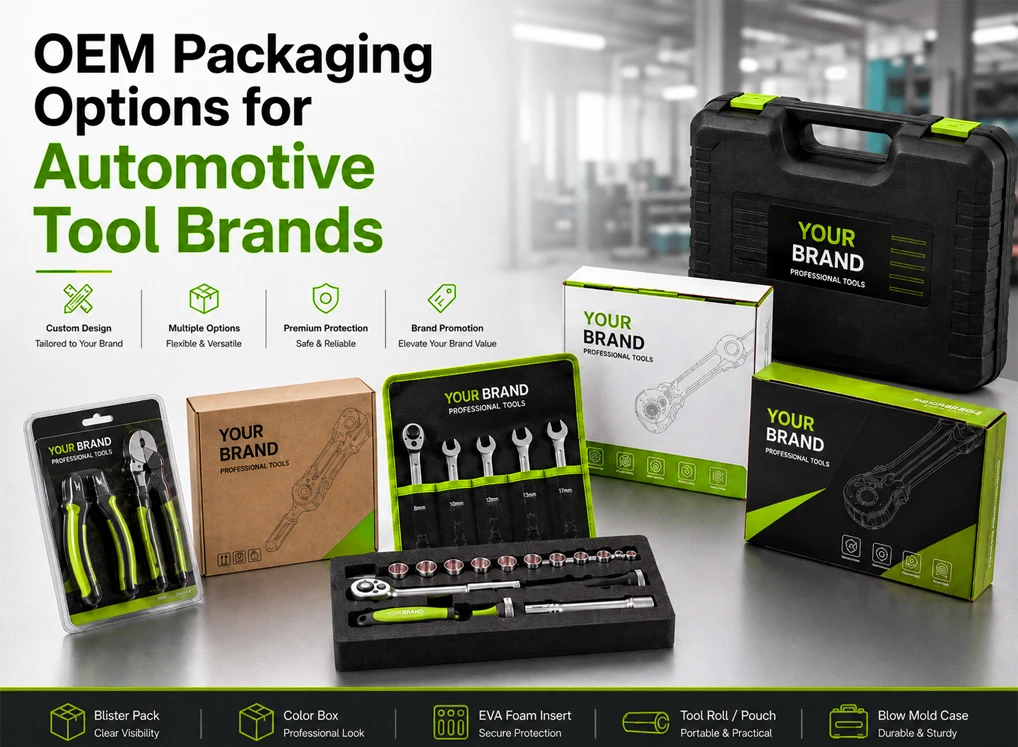
Common OEM Packaging Solutions
- Blow-mold cases for timing tools, pullers, bearing tools, diagnostic kits, and professional tool sets
- Plastic cases for compact hand-tool and service-tool kits
- EVA or foam inserts for product positioning, organization, and impact protection
- Color boxes for retail display and brand communication
- Blister packaging for sockets, wrenches, small hand tools, and accessories
- Double blister packaging when higher visibility and stronger retail protection are required
- Sliding cards for compact retail products
- Outer cartons for bulk transport, warehouse handling, and export shipment
| Packaging Type | Typical Application | Protection Level | Brand Customization | Relative Cost |
|---|---|---|---|---|
| Blow-Mold Case | Professional automotive tool sets | High | Logo, color, label, internal layout | Medium to High |
| EVA or Foam Insert | Precision and organized tool sets | High | Shape, layout, printing | Medium |
| Color Box | Retail automotive tools | Medium | Full artwork, logo, specifications | Low to Medium |
| Blister Packaging | Small tools and accessories | Medium | Card design, logo, product information | Low to Medium |
| Outer Carton | Shipping and bulk orders | Medium | Shipping marks, logo, labels | Low |
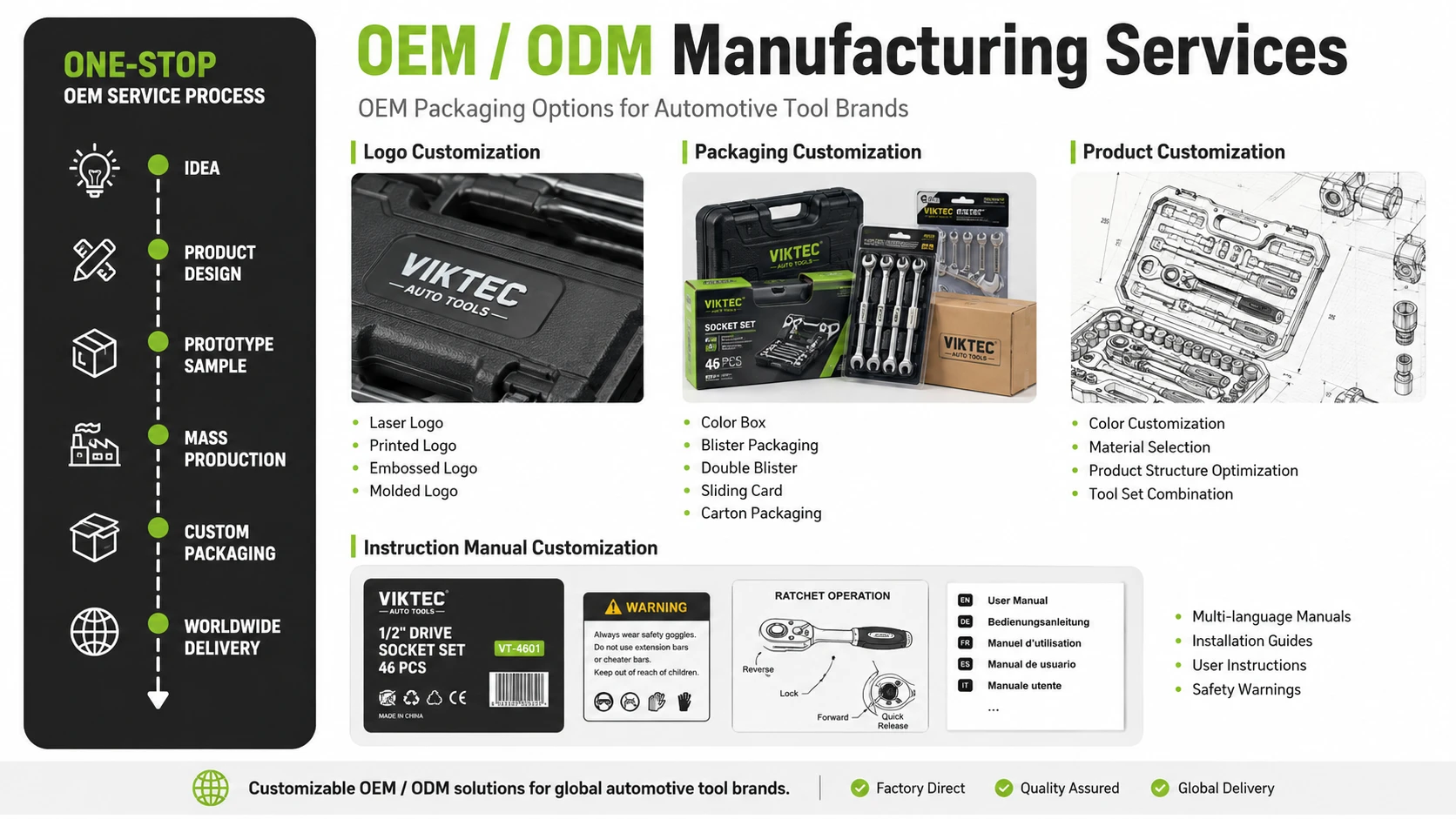
What Can Be Customized in an Automotive Tool OEM Project?
A complete OEM program goes beyond changing a logo. For a professional automotive tool Manufacturer or Supplier, customization may involve the product, packaging, documentation, and production process. The goal is to create a consistent specification that can be reproduced across future orders.
Logo Customization
- Laser logo
- Printed logo
- Embossed logo
- Molded logo
Packaging Customization
- Custom case color
- Color box artwork
- Blister packaging
- Double blister packaging
- Sliding card design
- Custom carton packaging
- Product labels and barcodes
- Internal foam or molded inserts
Product Customization
- Product color customization
- Material selection
- Product structure optimization
- Tool set combination
- Model and specification adjustment where technically feasible
Instruction Manual Customization
- Multi-language manuals
- Installation guides
- User instructions
- Safety warnings
- Brand information
- Product codes and technical data
What Does a One-Stop OEM Service Process Look Like?
A controlled OEM process helps reduce errors between design approval and mass production. For automotive tool brands, the process should confirm the product specification, logo position, packaging structure, artwork, labeling, and manual before volume production begins.
- Idea: Define the target product, market, brand positioning, packaging type, and purchasing requirements.
- Product Design: Confirm tool specification, combination, material, appearance, logo, and packaging structure.
- Prototype Sample: Produce or prepare a sample for dimensional, functional, visual, and packaging confirmation.
- Mass Production: Manufacture according to the approved specification and quality requirements.
- Custom Packaging: Complete cases, color boxes, labels, inserts, manuals, and export cartons.
- Worldwide Delivery: Pack finished goods for international shipment according to agreed logistics requirements.
Where Can I Buy Real OEM Parts?
Real OEM automotive parts are normally purchased through the vehicle Manufacturer, authorized dealerships, approved distributors, or established supply partners within the Manufacturer supply chain. For professional buyers, the key issue is traceability. Product codes, packaging information, technical specifications, documentation, and Supplier identity should be checked before purchasing.
It is also important to distinguish genuine OEM vehicle parts from aftermarket products and professional repair tools. An automotive tool Manufacturer may produce tools designed for servicing specific vehicle systems without being the original Manufacturer of the vehicle component itself. In that case, buyers should evaluate the tool according to its application, dimensions, material, function, compatibility information, and quality control rather than assuming that an OEM label automatically means an original vehicle part.
For distributors developing their own automotive tool brand, direct cooperation with an experienced Manufacturer can provide another type of OEM relationship. The Supplier manufactures the selected product while the distributor specifies its logo, packaging, manual, labeling, tool combination, or other Customizable requirements.
What Do OEM Tools Stand For?
OEM stands for Original Equipment Manufacturer. In the automotive tool market, however, the phrase OEM tools can be used in different ways. It may describe tools produced by an original equipment Manufacturer, tools manufactured for another brand, or tools developed according to a customer’s technical and branding requirements.
For international tool buyers, the commercial meaning is especially important. Under an OEM cooperation model, a factory may manufacture an existing automotive repair tool and apply the buyer’s brand, packaging, labeling, case design, or instruction manual. This allows distributors and wholesalers to build their own product lines without establishing a complete manufacturing facility.
OEM should also be distinguished from ODM. OEM production usually begins with an existing or defined product specification, while ODM cooperation may involve additional product design, structure development, tool combination, appearance changes, or packaging development according to customer requirements.
| Business Model | Main Approach | Brand Ownership | Typical Customization |
|---|---|---|---|
| OEM | Manufacture a defined or existing product for another brand | Customer brand | Logo, packaging, labels, manuals, selected specifications |
| ODM | Develop and manufacture according to customer requirements | Customer brand | Product design, structure, material, combination, packaging |
| Standard Supply | Purchase an existing factory product | Factory or neutral branding | Limited customization |
What Is OEM in the Automotive Industry?
In the automotive industry, an OEM is generally the company responsible for producing the original vehicle or original equipment supplied for vehicle production. Around these companies is a large manufacturing network that includes component makers, tool Suppliers, service equipment companies, and specialist factories.
In the automotive aftermarket, OEM is also widely used as a manufacturing business model. A professional tool Manufacturer can produce automotive repair tools for distributors, wholesalers, private-label brands, and retail chains. The customer may select an existing tool, define a required tool set, or request changes to packaging, branding, material, color, instructions, and presentation.
For automotive repair tools, effective OEM cooperation requires more than placing a logo on a product. Important elements include application accuracy, material selection, dimensional control, tool strength, case layout, product identification, packaging protection, user instructions, and consistent batch production. These factors directly affect customer experience and the long-term reputation of the buyer’s brand.
What Brands Are OEM?
Many internationally recognized automotive companies operate as OEMs or major original equipment Suppliers within the global vehicle manufacturing system. The exact role varies by company and product category. Some companies manufacture complete vehicles, while others supply braking systems, electronics, drivetrain components, bearings, sensors, engine components, or other systems directly to vehicle Manufacturers.
In the automotive repair-tool market, the situation is different. Many retail and professional tool brands do not manufacture every product in their catalog themselves. They cooperate with specialized Manufacturers to produce different tool categories under their own branding. This is one reason OEM and ODM manufacturing are common in automotive tools.
For distributors, the more useful question is not simply whether a brand is OEM. Buyers should evaluate whether the Manufacturer can provide stable quality, repeatable specifications, suitable packaging, Customizable branding, technical support, quality inspection, documentation, and consistent supply. A reliable manufacturing system is what allows an automotive tool brand to expand its product range without sacrificing consistency.
How Should You Choose an OEM Packaging Supplier?
Packaging should be evaluated as part of the complete product specification. A low-cost package may become expensive if it increases breakage, missing components, customer complaints, or warehouse handling problems. Buyers should therefore compare Suppliers using measurable requirements.
- Product protection: Tools should remain fixed during transportation and normal handling.
- Packaging structure: Cases and inserts should match the product dimensions and weight.
- Brand consistency: Logo, colors, labels, model numbers, and artwork should follow approved files.
- Documentation: Manuals and safety information should correspond to the actual product.
- Production consistency: Approved samples should become the reference for mass production.
- Customizable capability: The Supplier should support different packaging formats for different product categories.
- OEM and ODM capability: Product and packaging development should be coordinated when deeper customization is required.
Build Your Automotive Tool Brand with Professional OEM Packaging
Strong packaging protects the tool and strengthens the brand at the same time. VIKTEC supports automotive tool distributors and wholesalers with Customizable logo, packaging, product, manual, OEM, and ODM solutions. Contact us to discuss your product range and develop a suitable packaging program.