Vehicle service requirements across the Middle East are evolving as workshops handle a broader mix of conventional, hybrid and electric vehicles. At the same time, professional repair businesses are paying greater attention to service consistency, cleanliness and process control.
According to the International Energy Agency’s Global EV Outlook 2026,
electric car sales in the Middle East reached approximately
75,000 units in 2025,
representing growth of more than
40% year-on-year.
As the regional vehicle parc becomes more diverse, workshops need service processes that can support different vehicle technologies while maintaining consistent workshop standards.
Brake Fluid Replacement Is More Than Simply Changing the Fluid
Brake fluid plays an important role in transferring hydraulic pressure through the braking system. However, brake fluid is also hygroscopic, meaning it can absorb moisture from the surrounding environment over time.
Excess moisture can gradually reduce brake fluid performance and may contribute to corrosion, contamination and reduced boiling-point performance. For workshops operating in demanding environments, controlling how brake fluid is stored, supplied, exchanged and recovered therefore becomes an important part of professional brake maintenance.
This means a modern brake fluid service should not focus only on removing old fluid. Instead, the complete process should be designed around four key areas:
moisture exposure, air supply, fluid exchange and waste recovery.
1. Reduce Unnecessary Moisture Exposure
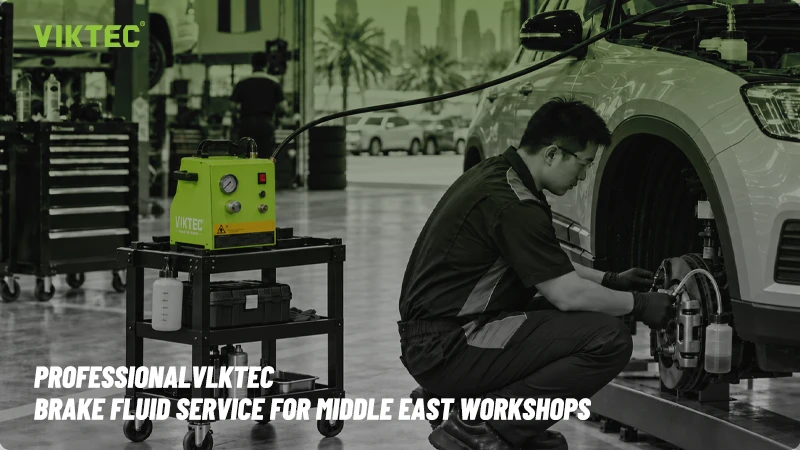
One of the most important considerations during brake fluid service is limiting unnecessary exposure of fresh brake fluid to ambient air.
Once a brake fluid container is opened, prolonged exposure to the workshop environment may allow additional moisture to enter the fluid. Professional workshops can therefore benefit from keeping containers properly sealed when they are not being used and using equipment that provides a more controlled transfer process.
This is particularly relevant when workshops are looking to establish repeatable service procedures rather than relying heavily on manual fluid handling.
2. Pay Attention to the Air Supply
For pneumatic brake bleeding or brake fluid exchange equipment, the quality of the supplied air can also affect the overall service environment.
Compressed air systems can contain moisture, oil residue or other contaminants if the air supply is not properly filtered or maintained. Where pneumatic equipment is used, workshops should therefore consider the condition of the air source as part of the complete service process.
Regulators, filters and moisture-control components can help workshops maintain a cleaner and more stable operating environment for professional brake servicing equipment.
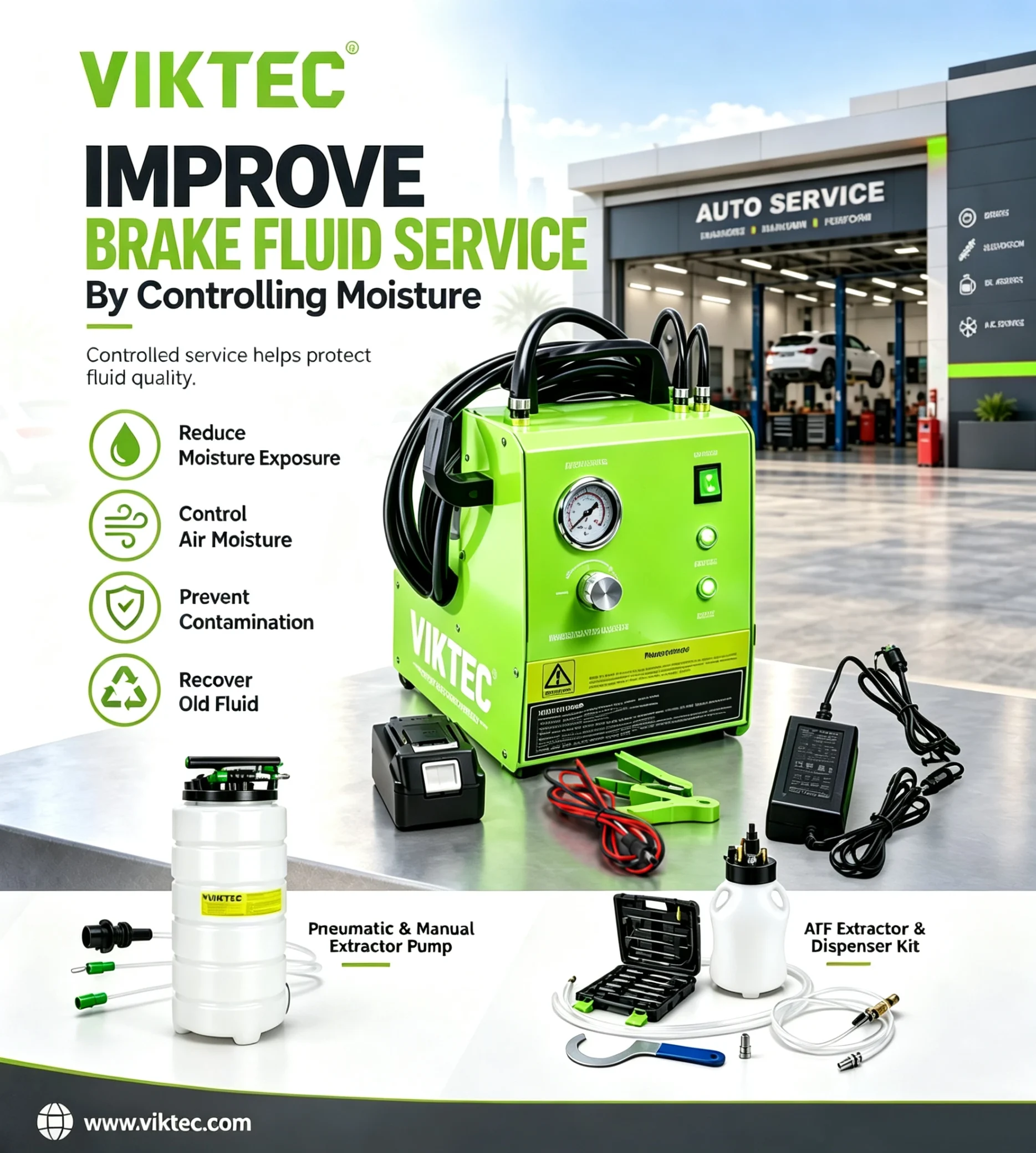
💧 Moisture Exposure
Minimize unnecessary contact between fresh brake fluid and humid ambient air during storage and service.
💨 Controlled Air Supply
Use properly maintained compressed-air systems and suitable filtration when pneumatic equipment is involved.
🔧 Controlled Fluid Exchange
Transfer new brake fluid through a cleaner and more controlled process while reducing the possibility of cross-contamination.
♻️ Waste Fluid Recovery
Collect used brake fluid in dedicated containers to help keep the service area cleaner and simplify subsequent waste handling.
Dedicated brake fluid exchange equipment helps technicians manage new and used fluid separately during servicing.
3. Make Fluid Exchange Cleaner and More Consistent
During conventional manual bleeding, technicians need to carefully control fluid supply, pressure and the collection of discharged fluid. If the process is not well managed, there is a greater possibility of spills, air entering the hydraulic system or contamination around the service area.
Professional brake fluid exchange and bleeding equipment can help technicians create a more controlled workflow by separating fresh fluid supply from discharged fluid recovery.
A consistent process can be particularly valuable for workshops servicing multiple vehicles each day, where repeatability and efficiency are important.
4. Do Not Ignore Used Brake Fluid Recovery
Removing old brake fluid is only part of the service. Workshops also need an effective way to collect and contain the discharged fluid.
Dedicated recovery containers can help prevent unnecessary spills and mixing with other workshop liquids. They also make it easier for technicians to visually monitor the removed fluid during the service process.
A More Controlled Workflow for Modern Workshops
As vehicle technology develops, workshops are increasingly combining traditional mechanical service with more specialized diagnostic and maintenance procedures.
Electric and hybrid vehicles may rely heavily on regenerative braking, but they still use hydraulic brake systems. This means workshop capability continues to depend on technicians having the right procedures and equipment for maintaining brake system components and fluids.
For Middle East workshops, the objective should therefore go beyond simply replacing old brake fluid.
Cleaner. More Controlled. More Consistent.
A professional brake fluid service process should control fresh fluid handling,
air supply, fluid exchange and waste recovery as one complete workflow.
Supporting Professional Brake Service with VIKTEC
VIKTEC provides professional automotive repair tools and workshop service solutions designed for distributors, repair workshops, service centers and automotive professionals.
From brake bleeding and fluid exchange equipment to diagnostic, engine, chassis and maintenance tools, VIKTEC focuses on helping workshops improve service efficiency and establish more consistent repair processes.
For distributors serving the Middle East automotive aftermarket, brake service equipment can also form part of a broader workshop solution covering vehicle maintenance, testing and professional repair.
Explore Professional Brake Service Solutions with VIKTEC
Looking for brake bleeding tools, brake fluid service equipment or professional automotive workshop solutions for your market?
Contact VIKTEC to discuss product specifications, wholesale cooperation,
OEM/ODM requirements and automotive tool solutions for your customers.
Market data source:
International Energy Agency (IEA), Global EV Outlook 2026.
Electric car sales in the Middle East reached around 75,000 units in 2025,
expanding by more than 40% year-on-year.