Choose a multi-piston brake caliper compressor by the arrangement of the pistons, the usable caliper opening and the area the plates can support. The plate should contact the points specified by the service procedure while staying square throughout its travel. A box that lists four- and six-piston applications can still be unsuitable for a particular caliper if the plates miss the outer pistons, the body hits the bridge or the handle has no room to move.
Measure a representative caliper with the service position and contact method established. The buyer needs the dimensions of the fitted tool, the way it moves and the access required by its driver. Those details are more useful than comparing the largest number of pistons in two listings.
Find out which pistons need support together
Identify where the pistons sit relative to the disc. A caliper can have multiple pistons on one side, or opposing pistons on both sides. On an opposed design, returning one set of pistons without the support specified for the other side can allow movement where the technician does not want it. Use the manufacturer’s service method to decide which pistons or pad backing surfaces need to be supported together. Draw the contact pattern before you compare tools.
Piston diameters can differ within a caliper. The relevant question is whether each required point can be supported without the plate touching a boot or resting on an edge. A long but narrow plate might cover the centreline of several pistons and still give poor support at the ends. An oversized plate can foul the caliper body. A side view and a view of the contact area help establish how the plate sits when the tool is under load.
Tesla’s integrated parking brake service instructions describe using a spreader to expand the pads and return the front pistons for the named Model S configuration. That example shows that the approved contact may be a pad or a backing surface in a specific procedure. For another caliper, check where its manufacturer specifies the tool should bear. Do not copy the contact method from one brake package to another. Tesla caliper spreader service example
Measure the opening at the start and at the end
| Measurement | How it affects fit | Evidence to request |
|---|---|---|
| Entry opening | The closed or starting tool and any approved plates must fit into the opening available for that service position. | Minimum installed tool thickness with the intended plates. |
| Required travel or spread | The tool must reach the required end position without bottoming or moving past its permitted range. | Usable range with the specified plate arrangement. |
| Piston centres and approved contact area | The plate needs to cover the required support points without loading boots or unsupported edges. | Plate drawings with contact dimensions and any adapter offsets. |
| Bridge and handle clearance | A tool that fits across the pistons may still hit the bridge or be impossible to operate. | Body envelope and drive access shown in the installed position. |
Take dimensions at the plane the tool actually occupies. A caliper can look open from the rotor side but narrow behind a bridge or near a casting rib. Ask for the dimensions with the plates and any extensions installed. If the tool maker lists the range only for its standard plates, do not apply that range to a different setup without checking. Adding a plate can reduce the minimum opening or change the useful travel.
As a hypothetical check, a narrow caliper may admit the smaller plate but leave the outer piston unsupported. A wider plate might cover both pistons but require the tool body to sit farther back where the bridge is in the way. The buyer should record both failed arrangements and request another plate or tool format. The fact that each plate passes one dimension in isolation does not make either an acceptable assembled fit.
Compare screw, ratchet and lever access
Screw-driven plate tools
A screw-driven assembly advances the contact surfaces through the movement of the screw. Compare where the screw sits, how the reaction is supported and how much room the hand drive needs. A centred design can help keep an appropriate plate aligned when fitted correctly. Check how the tool behaves if access makes the driver approach at an angle. The tool should be used with the drive and contact method the manufacturer specifies.
Ratchet-style spreaders
A ratcheting design can be useful if a technician has room for short repeated strokes but limited space to turn a handle continuously. Check the direction control, the swing needed at the actual caliper and how the tool releases after the pistons move. A ratchet body that fits the caliper unloaded may be harder to remove when the handle is obstructed at the end of the operation.
Lever and parallel-plate designs
Lever tools can offer a different way of taking up movement. Compare the lever arc and the plate footprint rather than assuming that the handle format determines the caliper coverage. A two-plate design describes how the contact surfaces are arranged. Screw, ratchet and lever describe how a particular tool is driven. Read both details because they can overlap in a catalogue.
Lisle lists distinct dual-piston and multi-piston-oriented tool designs in its brake tool range, including a dual-piston compressor and a quad pad spreader. Treat the named models as examples of available designs. Ask for dimensions and application evidence for the tool you are quoting. Lisle brake compressor and pad spreader range
Use an unloaded setup check to protect the caliper
Before applying load, confirm that the tool contacts the surfaces specified by the vehicle and tool makers. Look for interference with the piston boots, the caliper housing and any lines or wiring. A plate that rocks against a radius or touches one side first can change the force distribution. Correct the support and alignment before using the drive. If movement is uneven, a piston binds or a boot distorts, stop and assess the setup and the component under the service procedure.
Keep the caliper supported as specified for the operation. If the shop is checking an electronic parking brake caliper, confirm that the vehicle’s service state and prescribed mechanical movement have been established before trying the compressor. Tool capacity does not address the electronic requirements. After reassembly, the workshop is responsible for the vehicle’s required brake checks. A tool supplier’s plate drawing cannot verify the vehicle result.
Specify the sample before ordering for several bays
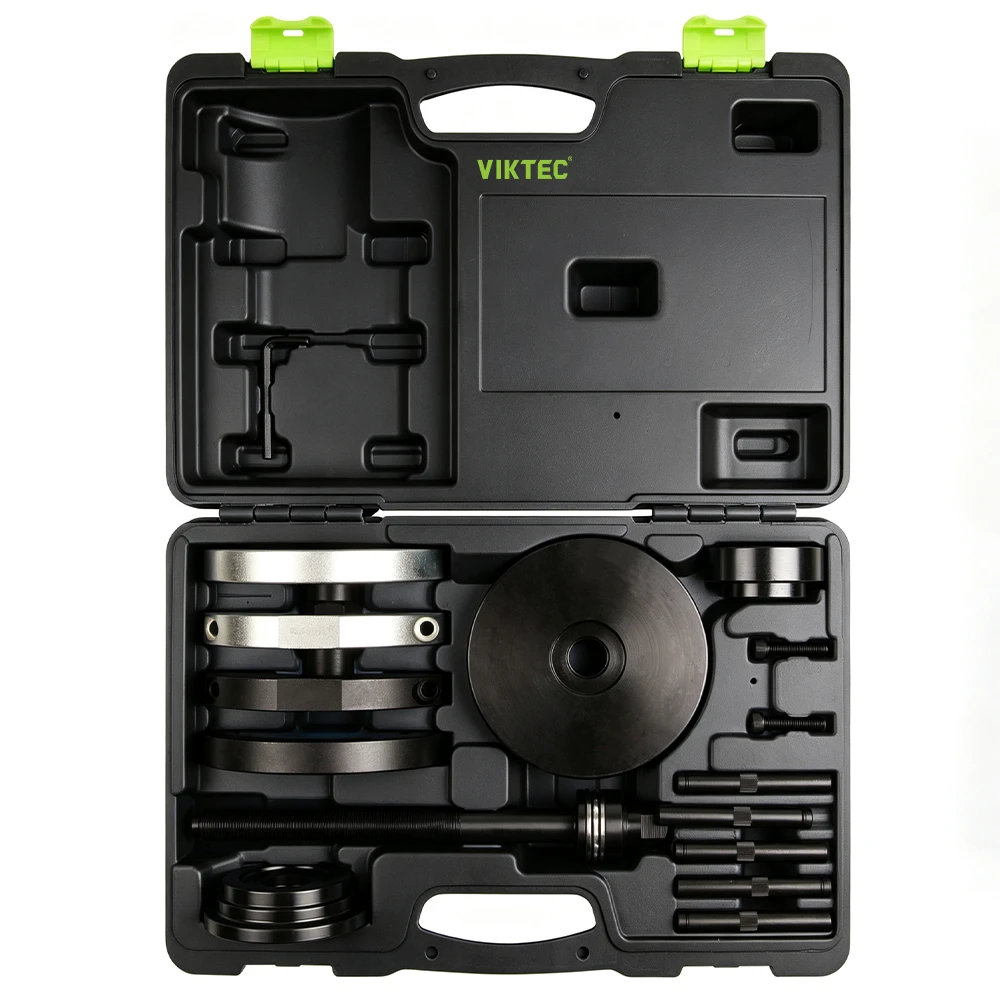
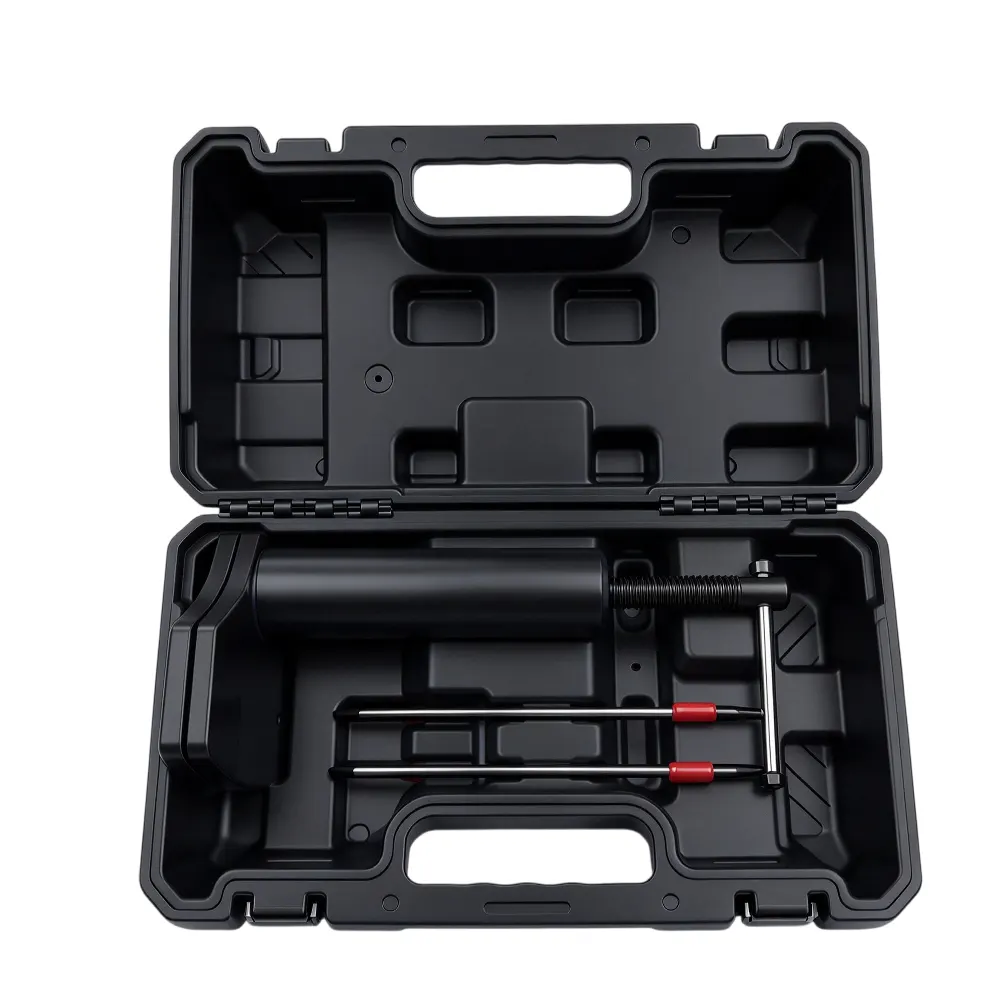
The VIKTEC VT01133J multi-piston compressor kit is listed for compatible one-, two-, four- and six-piston calipers. Treat those counts as an initial filter. Confirm the plate configuration, installed range and actual caliper geometry for each application. The correct plate can be different on two calipers with the same piston count.
For a sample programme, pick a narrow opening and the widest required contact pattern in the intended vehicle list. If one is an opposed-piston design and the other has pistons on one side, keep their checks separate. Photograph the unloaded configuration from the side and from the contact end. Record the part number and plate option, start clearance, maximum required travel and operating space. Then have the shop verify the approved service application and record the result.
Agree how spare plates, drive components or retainers will be identified. A distributor can use the marked part number, a drawing and a photo of the case insert to keep a revised kit separate from older stock. Check the supplied instructions, case contents and spare part information when the order arrives. If a longer plate is listed as optional, record it separately from the supplied kit. That keeps a promising sample from turning into a mistaken coverage claim for the standard case.
For a maintenance chain, it can help to group fitment by caliper geometry instead of the vehicle brand. Assign a stock code to each approved tool and plate arrangement, then attach the vehicle references to that code. If the shop needs two different plates for related brake packages, list them separately and use photos to show the difference. This approach makes it easier to reorder spares and to check which tools belong at each location. The brake caliper and piston tool range shows other mechanical formats that may suit a different opening.
Give handle clearance its own acceptance check
In a fleet sample, place the approved tool and plate in the service position without load. Check the space for the driver through the expected movement, then check where the release control will be when the tool comes out. A lever may have room for the first stroke and collide with a fixed bracket later. A ratchet may fit under a bridge but need access from the other side to release. Record the tool body orientation and the handle’s clearance, especially if the same caliper is fitted in different vehicle positions.
Before comparing prices, check whether the sample used a plate supplied in the kit or a separately ordered part. If the wider plate is optional, request the assembly drawing and the usable range for that exact combination. Confirm the plate stays supported on the intended contact points throughout the approved travel. Leave that configuration off the purchase sheet if the supplier cannot identify it by part number or the workshop cannot check the geometry.
On the inspection sheet, record which face the tool contacts, the entry clearance, which pistons or pads the plate supports and the first point of potential interference. Add the tool identifier and the applicable service document. A technician at another depot should be able to compare the delivered kit with that record before accepting it for the same brake package.
Buyer questions on multi-piston fit
Can one long plate cover both large and small opposed calipers?
Only if it fits the smallest opening, reaches every required contact point and has the needed travel on both. Check how the plate sits near the boots and bridge. A smaller approved plate may be needed even when the tool body is the same.
Does an overall plate width include the usable support area?
Check the drawing. A chamfer, slot, raised area or offset can reduce the part of the plate that actually contacts the specified surface. Request the working dimensions and, if possible, a photo of the plate in the tool.
Can a standard set be quoted with a separately supplied wide plate?
Ask whether the wider plate is approved for the exact tool revision and whether it changes the operating range. Identify its part number and list it as a separate order line if it is not in the standard case.
For a quote, send the caliper reference, piston layout, entry opening, contact dimensions, required travel, drive clearance and quantity. Include photos showing the bridge and contact faces. You can request the VIKTEC tool catalogue or send your multi-piston compressor application for a trade quote.