Use pressure bleeding when the vehicle procedure calls for a regulated supply at the reservoir and you have the correct cap adapter. Use vacuum bleeding where the vehicle permits drawing fluid from the bleed screw and the workshop can maintain a clean supply at the reservoir. For a busy bay, the decision usually turns on vehicle coverage, the ability to replenish fluid, the setup time and what the technician must verify at the end.
Start with the job list. Routine fluid exchange, a local repair and service after opening part of an ABS or stability-control system can call for different equipment and procedures. A pressure or vacuum unit cannot supply any electronic actuation the vehicle maker requires. Before buying, ask the shop which jobs it intends to do and which repair instructions apply.
Follow the two fluid paths
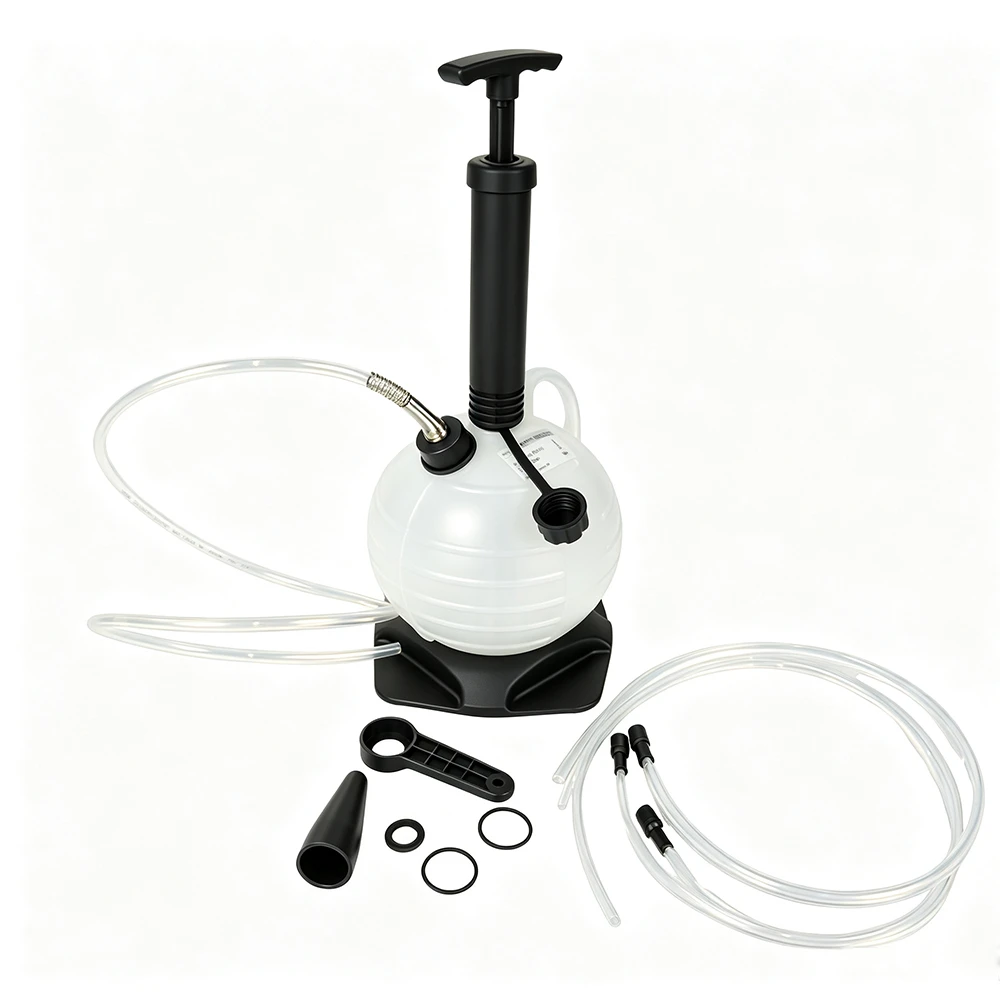
A reservoir-side pressure unit attaches to a compatible reservoir adapter. It provides the controlled supply that pushes fluid through the applicable circuit when the specified bleed point is opened. Some units carry fresh fluid, while others use a different supply arrangement. Check how the reservoir is replenished, what the unit’s gauge reads and where the adapter seals. The vehicle and tool instructions determine the method and the pressure for the job.
A vacuum bleeder connects at the bleed screw through a compatible nipple adapter, hose and collection bottle. The vacuum source draws fluid toward the catch bottle. A hand pump can be useful for some jobs, while a pneumatic unit needs a suitable regulated air supply. The fresh fluid still comes from the reservoir. A separate refill device may be useful where the procedure and tool allow it, especially when the operator cannot watch the reservoir and bleed point at the same time.
Keep the fresh and used fluid paths clear in a tooling specification. A pressure tank’s fluid capacity tells you how much fresh fluid the equipment can hold. A vacuum collector’s capacity tells you how much used fluid it can receive before it must be managed under the instructions. A refill bottle belongs on the fresh-fluid side. These are different inventory and handling questions even when the catalogues quote the same unit of volume.
Compare the setups the workshop will actually use
| Decision | Reservoir pressure setup | Bleed-point vacuum setup |
|---|---|---|
| Connection | Reservoir cap and seal, then hose or coupler to the pressure source. | Bleed screw tip adapter, hose and collection bottle. |
| Supply to confirm | Compatible fresh fluid arrangement, regulator or pump and gauge suitable for the procedure. | Hand pump or suitable regulated air supply, with a way to keep the reservoir topped up. |
| Workshop constraint | Cap coverage, stable seal, access under the hood and pressure release before removal. | Tip fit, hose condition, collection volume and the operator’s ability to monitor refill. |
| Uncertain observation | Pressure loss may come from the cap, hose or another part of the equipment. Isolate the cause before use. | Visible bubbles may include ambient air entering at the open screw threads or at an equipment connection. |
| Vehicle checks | Follow the specified sequence, pressure and electronic routines, then complete the vehicle verification. | Confirm that the method is permitted, follow the sequence and carry out the required verification. |
Motive’s Power Bleeder instructions describe checking the reservoir adapter and hose connections for leakage before using the unit with fresh fluid. The required service pressure and bleeding sequence are tied to the vehicle and equipment instructions. Ask what the gauge can show accurately in the working range, where it reads the pressure, and how the system is depressurized before removing the adapter. Motive pressure bleeder operating instructions
SKF’s Mityvac MV6830 is an example of a compressed-air-operated vacuum bleeder. Its published data and manual distinguish the air inlet from the fluid collection side. Compare the air consumption and inlet requirements at the stated conditions with the shop’s available supply. Do not use an air inlet rating as a pressure setting for the vehicle reservoir. SKF Mityvac MV6830 equipment data
Plan for bubbles, refilling and clean-up
Clear hose is useful for watching the fluid, but bubbles in a vacuum line are not a direct measurement of air trapped in the hydraulic circuit. Mityvac’s manual explains that air can enter around the bleed screw threads while the screw is open. A poor hose or nipple connection can also affect what the operator sees. If bubbles continue, check the equipment and the permitted procedure before deciding what they mean. Complete the vehicle’s final brake checks regardless of the appearance of the hose. Mityvac vacuum bleeder manual
Both setups require the specified fresh fluid and a way to prevent the reservoir from emptying. Ask how the refill bottle or supply tank is secured and how the operator will monitor its level. A unit that can collect more fluid may need a larger waste-handling routine, while a small kit may require interruption sooner. The right capacity depends on the job list and the vehicle’s instructions. Check the catch-bottle support and how used fluid is handled at the shop.
If several bays share equipment, keep the reservoir adapter, waste bottle and clean supply components identified by tool. Confirm which hoses and seals are approved for the fluid and how the supplier expects them to be cleaned and stored. A separate container for used fluid avoids confusion in a bay where pressure and vacuum tools sit on the same trolley. Brake fluid compatibility and safe handling follow the vehicle, equipment and fluid instructions.
Match equipment to frequent work and exceptions
A workshop with recurring jobs that call for reservoir pressure may benefit from a pressure unit and caps for its common reservoirs. First check whether the procedure also specifies a diagnostic routine. Tesla’s 2017–2023 Model 3 bleed and flush document describes both a pressure adapter and diagnostic actions for the brake system. The example is tied to that model and procedure. It shows why a suitable pressure unit alone cannot establish full job coverage. Tesla Model 3 brake fluid bleed and flush procedure
For a mobile technician or a shop with occasional applications that permit vacuum bleeding, compare a manual pump against the volume and working setup actually needed. A pneumatic version can make sense where the shop has an appropriate air supply and uses it regularly. Check setup time, sound level where relevant, hose routing, collection management and availability of tips. Do not assume one drive format improves throughput without seeing how the equipment is used.
For a mixed distributor order, give each recurring job a row with the vehicle and service operation, approved method, adapter reference, diagnostic requirements, fresh fluid arrangement and collection needs. Check which shop can complete the whole procedure. If one location cannot get a cap to seal and another lacks the diagnostic function, those are different gaps. Buying a larger pump will not resolve either one by itself.
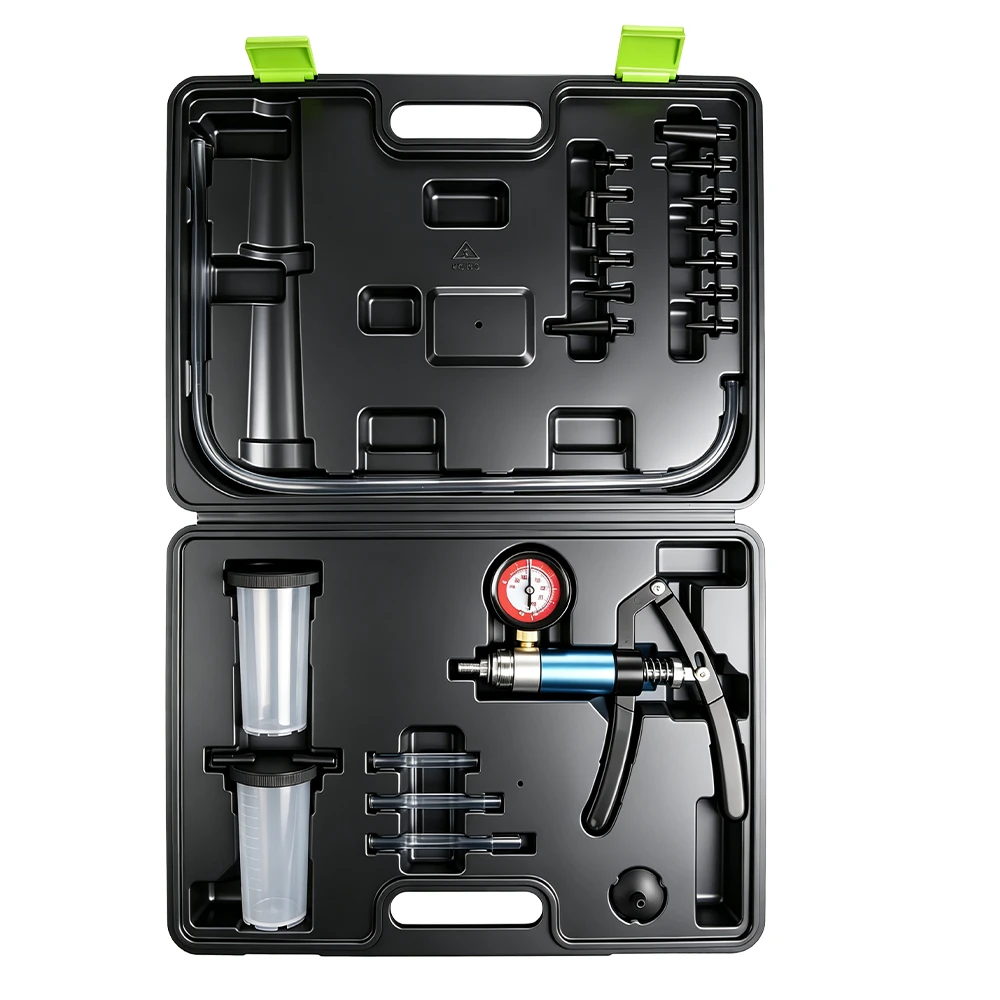
The VIKTEC VT01047C handheld vacuum and pressure pump kit is a catalogue example of a hand-operated pump with a gauge, hoses and adapters. The product describes vacuum or pressure for testing and also identifies bleeding applications. Verify the included pieces and intended connection for the specific job. A pressure function for testing should not be taken as proof that the set includes a compatible reservoir pressure bleeder. Compare related brake bleeding equipment by its intended connection and operation.
In an equipment trial, use a documented vehicle procedure and list every part used in the setup. Check whether staff can identify the cap or nipple tip, confirm the gauge and stop to refill when required. Note which pieces they would reorder after wear. If the test uses an existing diagnostic tool, record its coverage separately so a buyer does not assume it is included with the bleeder.
Compare setup time across the actual job mix
For a workshop considering both methods, choose an approved recurring job for each and time the setup, the checks and the clean-up separately during a supervised sample. A pressure setup may spend more time on cap selection and verifying the seal. A vacuum setup can need more operator attention to the collection and fresh-fluid supply. Write down where the second person, if any, was needed. Total bay time is more useful than a flow number measured by the pump maker under a different setup.
Record the reason for each interruption. An operator may stop to change a nipple tip, check the reservoir level, move the catch bottle or run a diagnostic routine. Some delays come from inventory or training rather than the pump. A buyer can act on the results by requesting the right adapters, placing a refill unit in the bay or specifying the required diagnostic access with the order. Keep each result attached to the approved vehicle procedure and the actual equipment used.
Specify the refill and waste arrangements before ordering spares
Ask for the part number of the reservoir-side refill components, any approved connector and the waste bottle lid or seal. In a shared shop, identify which hoses stay on the clean-fluid side and which belong to collection. The storage plan should follow the fluid and equipment instructions. If the same bays handle vehicles that specify different fluid types, check how the shop prevents contamination and maintains the approved supplies.
For a trial of an air-operated unit, record the regulator location, hose run and the connection the bay actually uses. Compare the observed operation with the tool maker’s requirements. If the supply cannot meet those requirements or flow varies during other air-tool use, the equipment comparison should capture that constraint instead of treating slow operation as a universal feature of vacuum bleeding.
Questions before ordering
Does a vacuum brake bleeder need a reservoir adapter?
Its vacuum connection is normally at the bleed point. The reservoir still needs the correct fresh fluid supply. If the setup uses a refill bottle or cap, check that it is compatible with the reservoir and the applicable instructions. A refill device has a different purpose from a sealed pressure adapter.
Why can air bubbles appear during vacuum bleeding?
Air can be coming from the circuit, from around the open bleed screw threads or from an equipment connection. Check the adapter fit and hose path and use the tool and vehicle procedures to interpret the result. If the brakes do not pass their prescribed checks, the work is incomplete.
How should the allowed pressure be confirmed?
Use the vehicle’s service instructions for the specific operation and the equipment limits for the full setup, including the cap and hose. Confirm the regulator, gauge and units. A pressure published for another car or for the pneumatic supply of a vacuum unit does not set the reservoir pressure.
Send the vehicle list, expected bleed operations, reservoir or bleed-point references, required diagnostic functions, available air supply and the number of bays. Use the VIKTEC tool catalogue request for range information, or ask for a trade quote for brake bleeding equipment with the application list.