A thin-wall wheel nut socket needs the correct fastener profile, clearance through the wheel recess and enough usable depth to seat on the fastener. Check the outside diameter over the protective sleeve. A bare socket can fit the opening while the same socket with its sleeve catches on the wheel. Then check the drive size and the manufacturer’s permitted drive method before you buy it.
Start with a wheel and fastener combination that matters to your customers. The difficult fit is often a deep or narrow recess, a tall capped nut, or a profile that differs from a normal six-point hex. A set labelled 17, 19 and 21 mm answers only the nominal opening sizes. It does not establish fit in every wheel pocket or compatibility with a locking fastener.
Measure the opening along the socket’s path
The mouth of a wheel pocket may be wider than the area around the fastener. Measure the narrowest part the sleeve and socket body must pass through, including the shoulder deeper in the recess. Use the socket drawing to find the largest outside diameter over the part of the sleeve and body that will enter. Check whether a sleeve flange, end cap or change in diameter becomes the limiting feature. A diameter printed for the steel body may be measured at a different point.
Next check whether the driver can approach on the fastener axis. A deep wheel design can restrict the extension or driver even when the socket itself goes through. At the other end of the tool, a bulky extension connection can foul the opening before the socket reaches the flats. An unloaded sample fit with the intended drive components is useful here. Keep the vehicle service instructions and the socket maker’s drive limits with that check.
A buyer can screen two candidate sockets with a short worksheet. Enter the narrowest wheel opening and the maximum sleeve diameter over the length that enters it. The difference is the nominal diametral clearance. It is a screening value, since finish, tolerance, angle and the shape of the pocket affect the real fit. If the drawing gives only the bare steel diameter, leave the sleeved fit open until you can measure the sample or obtain the correct dimension.
Read the four socket dimensions on a quote
| Dimension | What it describes | Practical check |
|---|---|---|
| Across flats and drive profile | The size and shape at the fastener end of the socket. | Confirm the actual hex or special profile on a sample fastener. |
| Outside diameter with sleeve fitted | The widest external diameter that must pass the wheel opening. | Compare with the tightest point in the pocket at the same depth. |
| Usable socket depth | The depth available to the nut or bolt before an insert or internal shoulder stops it. | Check how far the fastener or stud projects and whether the socket can fully seat. |
| Square drive and overall length | The drive interface and the envelope from the drive end to the working end. | Confirm the driver clears the wheel and is approved for the socket. |
Usable depth matters on tall nuts, projecting studs and recesses where the fastener head sits well below the wheel face. A socket sold as extra-long can put the wrench in a more accessible position, but the working hex may still have a limited depth. Look for a section drawing or check the sample with the correct fastener. If the internal insert bottoms against the nut or stud before the flats seat, the longer outer body has not solved the problem.
Chicago Pneumatic’s socket catalogue separates output sizes from external dimensions and identifies protective sleeves for particular models. HAZET’s impact socket set also documents the square drive, three wrench sizes and a replaceable external sleeve. These are examples of information a buyer should request for the specific socket being quoted. They do not establish which sleeve or dimensions apply to another brand. Chicago Pneumatic impact socket dimension tables · HAZET wheel socket specifications
Choose thin-wall construction for a real clearance constraint
A standard wheel socket can be a better inventory choice where the wheel pocket is open and there is no risk of interference. Select a thin-wall version when a drawing or an actual wheel shows why the standard body cannot seat. Thin-wall construction describes the geometry. Check the specific tool for impact approval, the correct square drive, any retention requirements and the manufacturer’s restrictions. Colour and finish cannot tell you whether the tool is approved for powered use.
When comparing a protected and unprotected design, write down the fit requirement for the sleeved tool first. The outer sleeve helps keep the steel body away from the finished wheel surface when the socket is aligned. It can still rub if it traps grit or contacts the recess under side load. Check that the sleeve is present and in suitable condition at receiving, and ask whether a replacement sleeve is available for that exact socket. A generic sleeve of similar colour is not a reliable match.
Keep final tightening separate from the access decision. Confirm the vehicle’s specified tightening sequence and torque and use the appropriate torque tool. A socket’s impact designation describes how the manufacturer permits the socket to be driven. It does not determine the final tightening requirement. Likewise, a wheel-protection sleeve does not change the fastener’s seating geometry or establish that the socket fits an aftermarket bolt.
Check which fastener the customer calls a wheel lock
Some customers use “wheel nut” for an ordinary hex nut and “wheel lock” for a patterned anti-theft fastener. A shallow or narrow hex socket still needs a compatible hex. A patterned lock may require the correct original key or a service tool identified for that pattern and procedure. Ask the customer for a photo of the actual fastener and, where available, its identifier. Do not quote a hex socket for an unknown lock from the name alone.
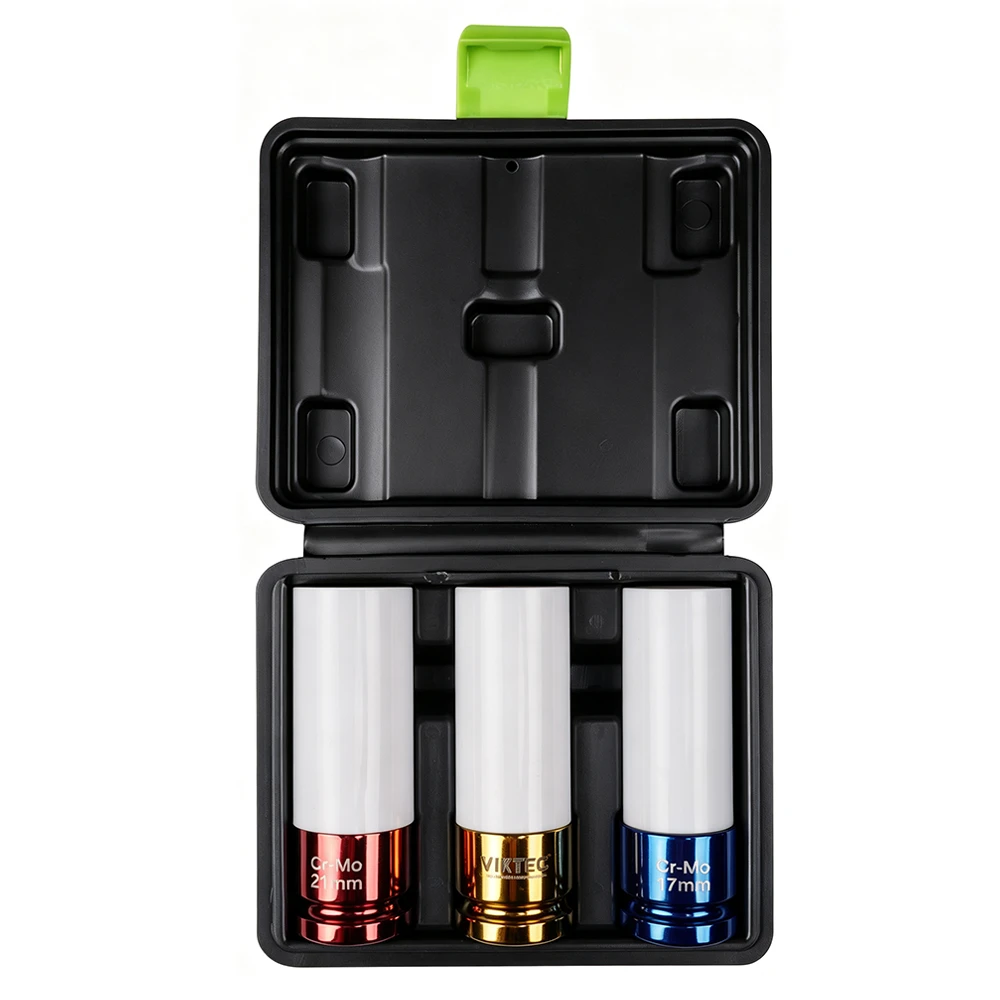
The VIKTEC VT01223 thin-wall wheel socket set is listed for recessed wheel fastener work. The product photo shows three sleeved sockets. Confirm the profile, marked sizes, sleeved diameter and allowable drive for the current stock before publishing a fitment listing. If the customer needs a patterned wheel-lock key, describe that requirement separately in the enquiry. The product title alone is insufficient evidence of the exact pattern.
Where a damaged or swollen capped nut is suspected, check the fastener against the vehicle repair guidance and the actual dimensions. A normal socket may no longer seat as expected. Treat the fastener condition as a separate service issue and use the procedure that applies to it. A larger thin-wall socket chosen simply to get over the cap can engage the flats poorly. For stocking purposes, make the reason for the special socket explicit so the technician can distinguish clearance, profile and damaged-fastener requests.
Build the set around the wheels you can check
Use the workshop’s service records to pick a short list of fastener sizes and wheel profiles. For each recurring job, record the minimum pocket diameter, fastener depth, needed square drive and whether a protected sleeve is part of the fit. Sample the tightest wheel in each group. If the distributor also serves aftermarket wheel shops, add a representative deep recess and ask which special key shapes they encounter. The sample list should reflect real constraints rather than the largest number of pieces available.
Ask the supplier to identify the socket, sleeve and any insert in the parts list. Record whether a sleeve can be replaced independently and how it is retained. At receiving, check that the etched size agrees with the case label, that the sleeve seats correctly and that the sample passes an unloaded fit check. If a restock arrives with a revised sleeve or insert, compare it against the previous drawing before using the old outside diameter in a listing.
Some fleets use one drive across most of the bay and keep an unusual deep socket at a central tool station. Others need duplicate sizes because two technicians work on wheels at the same time. Buy the set by work frequency and availability of individual pieces. A missing 19 mm socket can idle a set even when the rest of the case is complete. Ask about spare sleeves and separately orderable sockets when that matters to the way the workshop issues tools. See the VIKTEC wheel and tire tool range for adjacent workshop equipment.
Here is one useful way to write a repeat order. List the fastener profile, across-flats size, minimum usable depth, maximum sleeved diameter over the working length, square drive, approved driver and requested quantity. Attach the wheel drawing or the actual sample reference. If the supplier returns a dimension that applies with the sleeve removed, keep it in a different column. This prevents an apparent match on paper from becoming an interference problem at the vehicle.
Compare two sockets at the same point in the recess
Suppose the narrowest part of a sample wheel pocket measures 29 mm. One supplier lists a steel body of 26 mm and gives no sleeve dimension. A second quotes 28 mm over the fitted sleeve, measured at the section that will enter the pocket. Only the second quote can be screened against the 29 mm measurement as supplied. The nominal difference is 1 mm across the diameter. It still needs a sample fit because the opening may taper and the sleeve and recess each have tolerances. This is an example of comparing measurements, not a clearance recommendation for a wheel.
After checking the diameter, put the sample socket over the actual fastener with the intended driver or extension attached and without applying torque. Confirm that the hex seats to the intended depth and that the sleeve can be withdrawn from the pocket. If the driver cannot align, document where the connection fouls. The repair might require a different socket length or a different approved drive arrangement. Keep the checks separate on the order so a replacement tool can be evaluated in the same way.
Questions from the parts counter
Does a rotating sleeve make a socket fit a smaller hole?
Check the diameter over the sleeve. The rotation is a feature of the specific sleeve design and does not reduce its outside diameter. Confirm that the complete tool can approach the fastener squarely without contacting the wheel.
Can a replacement sleeve from another size be used?
Use the replacement identified for the socket and revision. Similar-looking sleeves can differ in inside diameter, length and retention. If a supplier can supply individual replacements, record the part number next to the socket SKU.
Which number should appear on a distributor fitment chart?
Show both the fastener size and the outside diameter over the sleeve, with a dimension sketch if available. Add usable depth and drive size. The buyer can then compare the fastener and the recess separately.
Send the fastener profile and size, wheel pocket dimensions, useful socket depth, square drive, quantity and a photo or reference for any anti-theft hardware. Use the automotive tool catalogue request to review the range, or request a trade quote for wheel sockets with those details.