

Prevent avoidable bearing installation errors with clearer adapter selection, support arrangements, instructions and workshop feedback records.
Insights

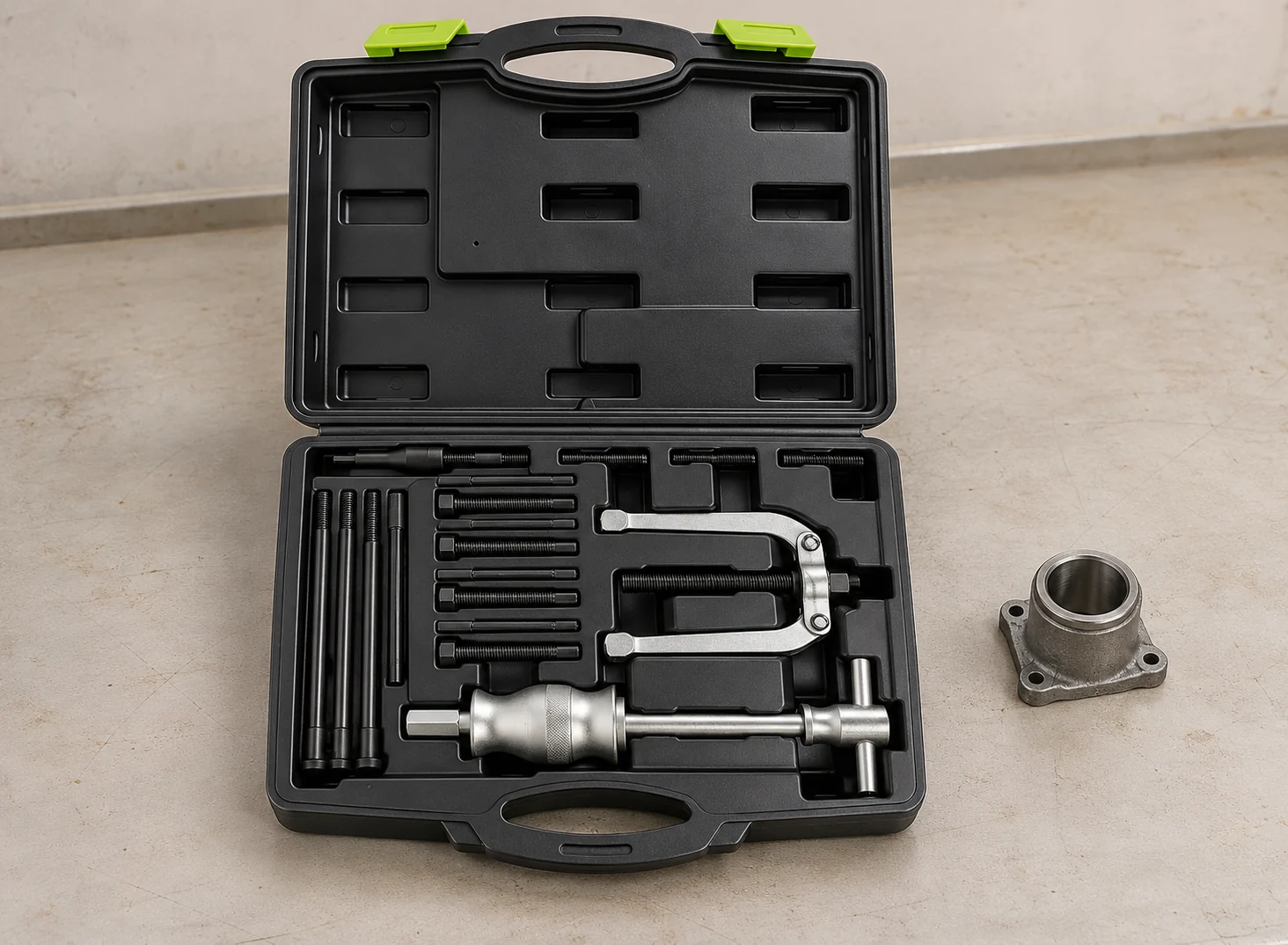


Bearing Separator vs Puller: Clearance and Grip Compared
A bearing separator provides a gripping or support surface behind a bearing or similar component. A puller supplies the arrangement that draws the component away from its seat. They are often used together: a separator, connecting rods, crossbar and forcing screw can form a complete separator puller.

How to Use a Bearing Puller Without Damaging the Assembly
Using a bearing puller starts before the forcing screw turns: identify the retainers, confirm the gripping and reaction surfaces, and check that the tool is aligned with the removal direction. If the bearing does not move as expected, stop and investigate the setup rather than treating extra force as the next step.

Internal vs External Bearing Pullers: Which Job Needs Which?
An external bearing puller grips the outside or rear face of an accessible component. An internal bearing puller engages from inside a bore or recess. Choose between them by the available gripping surface and the direction the bearing must travel—not by whether the tool looks larger or more powerful.

How to Choose a Bearing Puller for Automotive Service
To choose a bearing puller, identify where the bearing is fitted, find a sound surface the tool can grip, and measure the space available for the jaws and spindle. Check force capacity only after those conditions are satisfied. A larger puller is not a useful upgrade if its jaws cannot reach the bearing or its reaction point cannot be supported.